The fifth season of the mentorship program brought together participants and mentors of the Experiments’ Platform for a residency in Helsinki, curated together with Kulttuurisauna, during which four project creators tested their experiments in various urban spaces, looking for ways to slow down in the intense context of spatial metamorphosis.
2025 09 15
Warmed by the unexpectedly hot July sun, we walk through landscapes of transformation – mountains of rubble, the tops of cranes protruding above the water, quays with scattered construction tools, openly exposed pipes and wires, an abundance of fences and curbs, signs directing movement to one or the other side of the road. At the end of this structural corridor, like an oasis of tranquility, the bright and iconic Kulttuurisauna building greets us. Here one of the platform mentors, architect Tuomas Toivonen together with an artist Nene Tsuboi nurtures a cultural sauna space, where a café also operates, lectures, film screenings and other meetings are held. We step inside, take off our shoes, fall silent. We all meet together for the first time. Tuomas tells us about the new bridge stretching alongside the sauna, which whistles loudly when the wind blows. We dive into the sea to refresh ourselves, examining the brand new body of the bridge hanging above the water, which later speaks to us in the language of wind. We start the first evening with a dinner prepared by Tuomas, which pleasantly fills us with the warmth infused by the hands of local farmers.
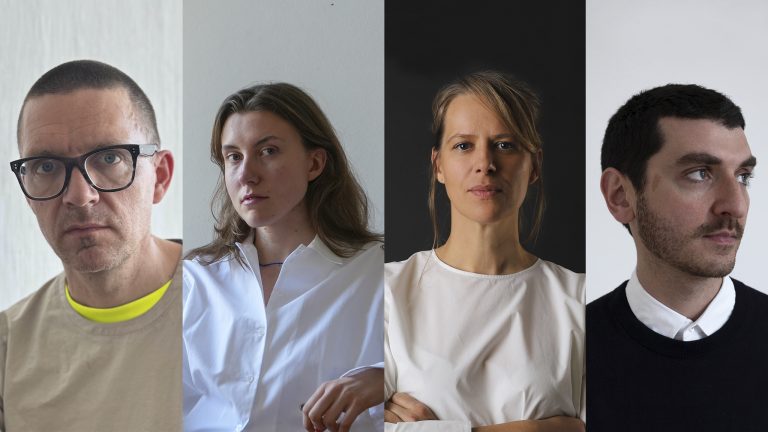
From the very beginning it is clear – Helsinki will become a suitable platform for the theme to evolve, the abundance of new construction is so visible that it cannot be bypassed in everyday trajectories. How to stop, listen and discover not necessarily material ways of acting in such an environment? In this context, four participants of the Experiments’ Platform – Gabrielė Dužinskytė, Guoda Šulskytė, Erik Vojevodin and Laura Norkūnaitė, together with mentors Paula Veidenbauma, Indrė Umbrasaite, Tuomas Toivonen and Vano Ksnelashvili, and curators – Artūras Čertovas, Kamilė Vasiliauskaitė and Aistė Gaidilionytė, embarked on spatial explorations reflecting abundance.
We settled in an old wooden villa on the seashore of Laajasalo – one of the islands of Helsinki, which seems to be split into two contrasting worlds – a quiet natural refuge and an intensive extraction and construction site. Currently, the island is being connected to the city by a huge new bridge, clearly visible in the city skyline when arriving by ferry from Tallinn. In order to create the basis for a new residential district, the island was artificially expanded. This is one of the largest projects in the city of the last decade – the bridge creates a pretext to develop new buildings while expanding the city to the island and vice versa. An oil harbour operated on the island from 1951 to 2010, and after it closed, construction work began on a new residential district, Kruunuvuorenranta (literally translated – royal slope of the mountain). When expanding the territory for new construction, part of the forest on the island was cut down. Local activists fought against this intensively – they even set up a tent camp in the forest as an act of protest. They managed to achieve a pause in the project development and gain more time to plan further actions. Unfortunately, the trees were still cut down. These processes were studied by Gabrielė Dužinskytė during her experiment testing in Helsinki, together with her mentor Paula Veidenbauma. In the Economies of Wasteland project, she delves into wastelands (happened-lands) – ghosts of efficiency, or what happens after the landscape. Urban spaces without beginning or end, that are difficult to define yet they expand the urban milieu. Her gaze is directed towards the Baltic Sea and islands – especially man-made ones – and the extractive, sometimes absurd processes behind their emergence. Using a role play format, Gabrielė invited the Experiments’ Platform team to step directly into the Kruunuvuorenranta construction site and discuss the ghosts of the project. What are the values of this territory? What actors are involved in this process? What is the reason behind the miscommunication? Each participant embodied a different character – a bird, a local resident, an activist, an oil company employee, a developer, a fisherman. Pairs of these characters set off on a journey through the vast construction site, among soil, sand, gravel hills, piles of blasted rocks and working machines. Having detected the spirit of the conflict, the actors marked the chosen territory and left a building permit document there. This experiment involved reflections on the inertia of large-scale construction projects, the course of miscommunications that arise in the process, the responsibility and agency of the architect, the indifference of residents, and raised the question – how to find a point of dialogue between residents, developers, activists, builders and non-human beings?
Gabrielė Dužinskytė, experiment Economies of Wasteland, Helsinki, Laajasalo. Pictures by Ikko Alaska
Erik Vojevodin’s experiment started by taking a ferry from Laajasalotowards the city center, from where we continued our journey to the Helsinki Olympic swimming pool. This is the oldest public outdoor swimming pool in Finland, built for the 1940 Olympic Games, designed by architect Jorma Järvi. The pool area is charming – surrounded by trees and a rocky slope, the swimming area is like in a park, surrounded by a network of paths and tracks, after swimming you can go for a walk. When you climb the slope, a panorama of the amusement park opens up, you can clearly hear and see visitors flying upside down on the roller coasters. Here we started Erik Vojevodin’s experiment Public Bath – with the help of his mentor Tuomas Toivonen, he delves into the state as a place, using the ritual of bathing in a public space, exploring an immersive experience. How to swim without swimming? Before entering the pool area, we received laminated instructions on how to act, when to perform which action, and a white envelope with the letter a, which we could open only after visiting the pool. One of the essential elements of the instructions was the rule not to talk during the experiment. Thus, we became a strange group of reflective actors scattered throughout the space, observing repetitions and irregularities in a public open-air pool on a hot summer day, repeating an invented sequence of actions three times, asking ourselves when was the last time we improvised. After this strange bath, we followed the instructions and moved towards the Kiasma Museum of Contemporary Art through Töölö Park. We walked concentrated, without talking, following the train of thought that had begun in the bathing experience. We entered the museum space – object a, the envelope, which we had not yet opened, was our ticket. We miraculously entered the exhibition halls – the museum staff accepted the envelopes, we assigned a group leader who was given a card to open the door, and found ourselves inside. After experiencing the works, we met outside, at Nina Beier’s sculpture-fountain Women and Children, for reflection on the experiences. After three hours of silence, speaking for the first time, we had a lot to share.
Erik Vojevodin, experiment Public Bath, Helsinki. Pictures by Ikko Alaska
Laura Norkūnaitė, who is researching the layers of urban velocities, invited us to see the spaces of central Helsinki differently. Laura, accompanied by her mentor Vano Ksnelashvili, is exploring the dimensions of speeds in an urban context with her project Urban Velocities. In search of linear, cyclical rhythms, relying on the laws of polyrhythmia, eurythmia and arrhythmia, she creates speed maps and hopes to see regularities that would become another way to read the abundance of cities. Together, we experienced the active city square Narinkkatori, the busy street Aleksanterinkatu and Kaivopuisto Park. In each of these spaces, we recorded selected elements that affect movement and those moving in them. To do this, we used foil prints, beeswax, which melts to take on the shapes of cavities, the cyanotype photography method, a scanner, and a sound recorder. Empowered by these unusual tools, we set out to explore the city by kneeling on the embankment, touching its surfaces, wrapping door handles and bench details in foil, walking with cyanotype sheets pressed to our chests, and occasionally opening them to capture the shimmering shadows. While in the park, we learned that between it and the island visible from the shore, there is an underwater tunnel, used only in emergency situations or for military purposes. How does this invisible layer affect the rhythm of the water, its inhabitants, the island, and the park? This playful action in intensively used urban spaces allowed us to see their multi-layered life, come up with stories of create new trajectories of movement and in our own way slow down the routine rhythm of spaces.
Laura Norkūnaitė, experiment Urban Velocities, Helsinki. Pictures by Ikko Alaska
Guoda Šulskytė’s wind search led us to discover another layer of Helsinki – the surroundings of the Redi shopping center, with heavy traffic around, bridges, underpasses, towers perched on the roof of the shopping center cutting through the city panorama, and post-industrial landscapes. Guoda, together with her mentor Indrė Umbrasaitė, is developing the experiment Windcatcher for exhausted winds, which explores “anthropogenic” wind systems in the urban environment that slow down the natural flow of air. During Guoda’s experiment, we set out in search of ventilation openings in Helsinki, trying to sense what happens at the meeting point of the air they blow out and the natural wind. Each participant in the experiment received a prepared questionnaire, which they could comfortably hang around their necks and fill out while walking and looking around. We used soap bubbles, a sound recorder, and a camera to record the movement of the wind. Spread out in the vast shopping mall entrance space, each of us followed a different wind trajectory. This search was completed by a meeting of all windcatchers on the roof of the shopping mall, where, standing on the artificial grass carpet and surrounded by the roar of ventilation openings, we created a choreography of tired winds together. Thinking about the sound, rhythm, and intensity of the artificially blown winds, we applied the corresponding movements and made different sounds. In response to them, the characters representing the real winds also danced. This dance became an engaging form of reflecting on the automated devices surrounding us and the vibrations they constantly emit – sounds, smells, air currents, and speculating about what happens when they merge with the vortex of natural winds.
Guoda Šulskytė, experiment Windcatcher for Exhausted Winds, Helsinki. Pictures by Ikko Alaska
The residency week in Helsinki provided a platform for experimentation and testing of ideas. In the context of intensive construction and development, we sought for rituals that allowed us to slow down, step back and reflect. By immersing ourselves and then stepping back from the fast-paced urban spaces into the refreshing nature of Laajasalo or the calming Kulttuurisauna space, we tried to see the processes of urban development, renovation and acceleration through different perspective, considering ways to remain resilient to their inert and at first glance untraceable course. Each experiment in its own way invited us to delve into a deep and attentive observation. However, the most important element was being together, the conversations that started in unexpected environments – while sailing on a ferry, swimming in the sea, exploring a construction site, sitting on the pavement of a city square, or among the geese in a park, visiting the Helsinki Biennale, sitting on stones, with the sound installation of the artwork playing nearby, or sitting at a table on the veranda long into the evenings, as it never got dark.
The team continues to develop their experiments and reflect on abundance. The next presentation of Experiments’ Platform is coming soon – on October 4-5, at the Copenhagen Architecture Biennale. Each participant will present a happening in a different city space, where guests will be invited to register and briefly immerse themselves in the experiment. These presentation events will be finalised by an open discussion by the project team about alternative education and experimentation. The outcomes will also be presented in Vilnius – the opening of the Experiments’ Platform Season 2025 exhibition is scheduled in the begining of November at the SODAS2123.
Project is funded by: Lithuanian Council for Culture, Nordisk kulturkontakt Culture and Arts programme and Vilnius City Municipality.
Project’s partners: Kulttuurisauna and Copenhagen Architecture Forum.
Information partners: Artnews.lt, VILNIUS TECH Architecture Faculty, Vilnius Academy of Arts / Department of Interior Design.
We, Public Institution “Architektūros fondas”, legal entity code 126391219, e-mail address hello@archfondas.lt, we want to publicize our activities by sending you our newsletters. As a result, we need to collect, use and store information about you as described in this consent form. We would like to ask for your consent to do so. If you give us consent to send you newsletters, your personal data will be collected, used and stored on the basis of this consent (Section 6 (1) (a) of the GDPR).
In order to achieve these goals, we may share your data with external service providers who provide us with newsletter sending and data storage services. These service providers have undertaken not to disclose the personal data they receive. We do not share your information with entities outside the EEA (the European Economic Area consists of all EU Member States plus Norway, Iceland and Liechtenstein).
Your data will be processed until the consent is revoked, but for no longer than 3 years. Before the end of this period, we may ask you if you wish to renew this consent for an additional period of three years. Such extension of consent will not deprive you of the right to withdraw your consent at any time, as set out below.
In the event that you consent to us collecting, using and storing data about you for the above purposes, you may revoke this consent at any time by contacting us at the contacts below or by clicking on the appropriate link in any of our newsletters. You also have the following rights regarding the protection of your personal data:
make a request for access to available information about you if we process your personal data from which we can identify you;
submit a request to correct or supplement the available information about you;
make a request to delete illegally held information about you;
make a request to us to restrict the processing of information held about you when you dispute the accuracy of the data or object to the processing, you do not consent to the deletion of your unlawfully processed data or you need the data to make, enforce or defend legal claims;
to challenge the collection, use and storage of your information when we process your data in accordance with a legitimate interest as a basis for data processing;
submit a request to export your data if you have provided us with the data in a systematic, commonly used format and have given your consent to the processing of such data or we have to process this data in order to fulfill the contract with you;
to submit a complaint to the State Data Protection Inspectorate (more information at vdai.lrv.lt).
We note that the exercise of these rights may be subject to conditions and / or exceptions provided by law. If you have any questions or any part of this consent seems unclear to you, we are ready to assist you. You can contact us by e-mail. by e-mail to dataprotection@archfondas.lt. If you have no objections to the information contained in this consent form, please complete the consent form below. By clicking on the “I Agree” button, you confirm that you have read and understood this notice and voluntarily agree to the public body “Architektūros fondas” sending you its newsletters to the address you have provided.