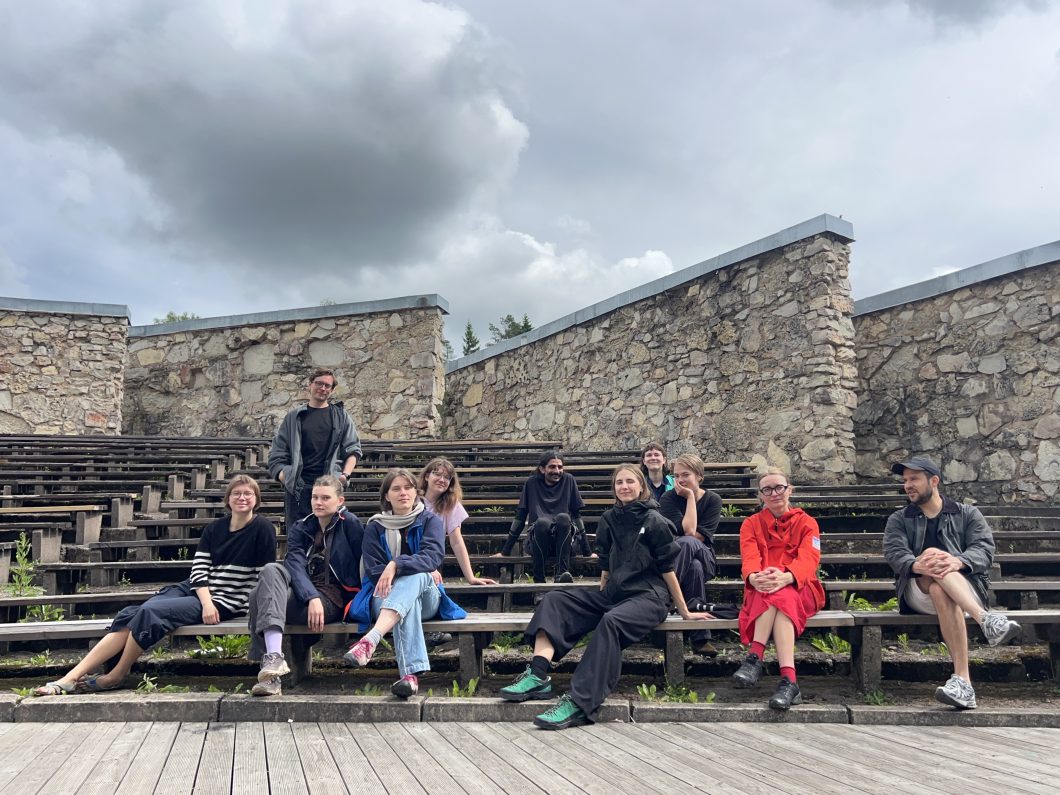
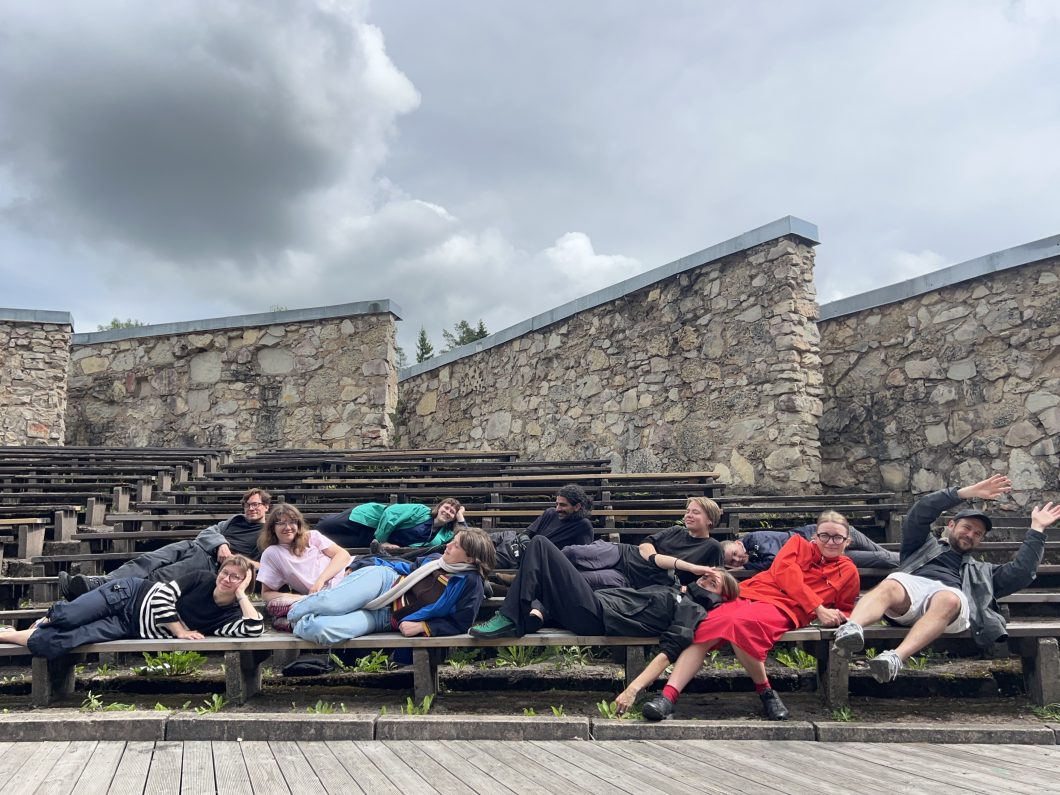
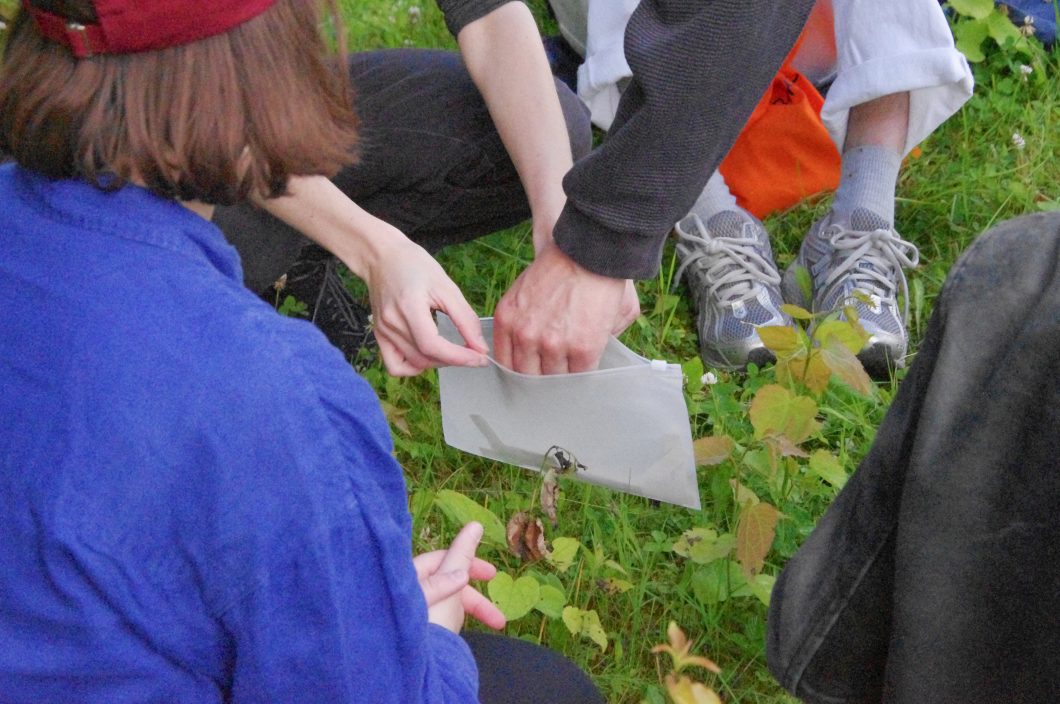
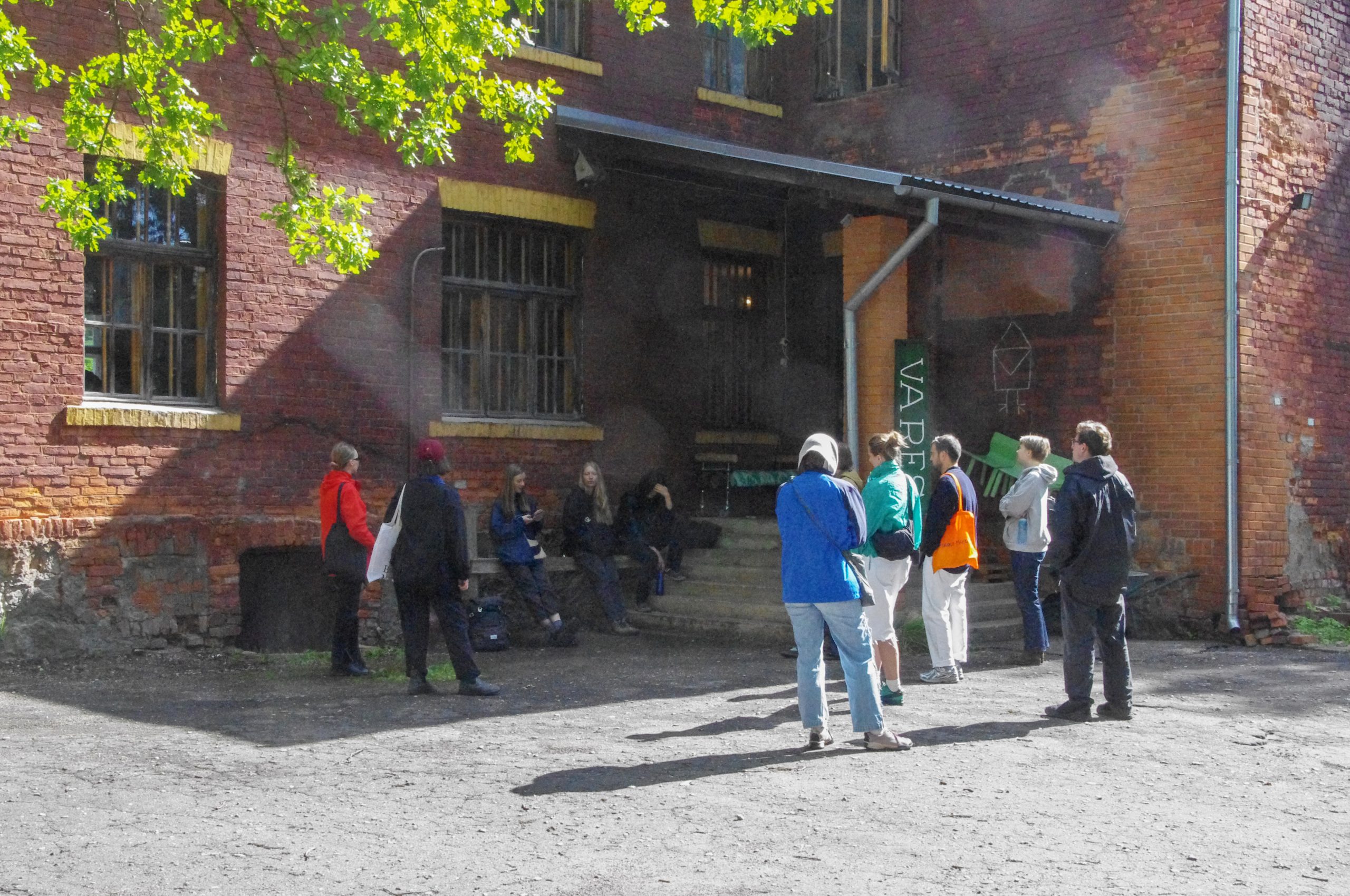
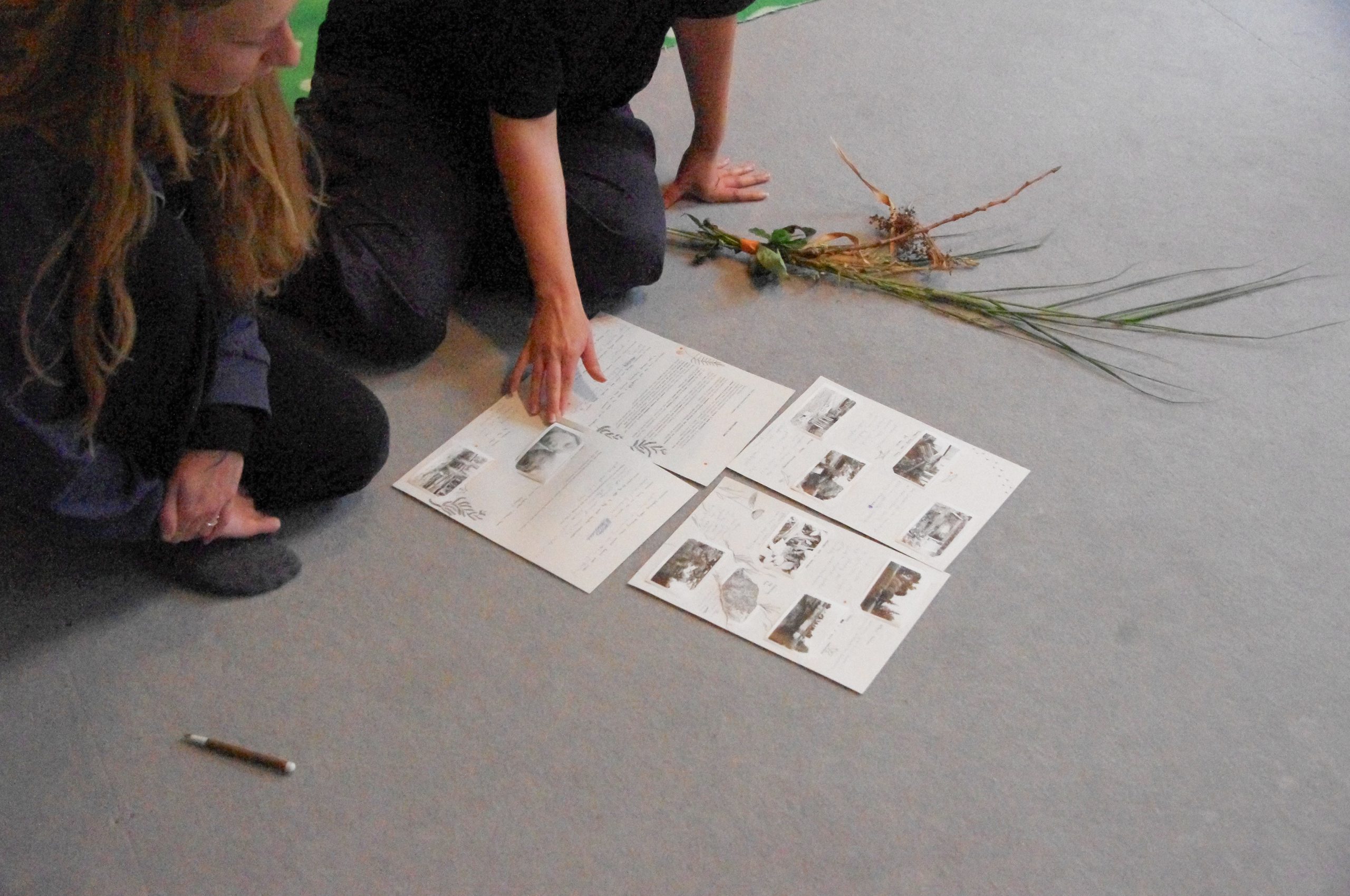
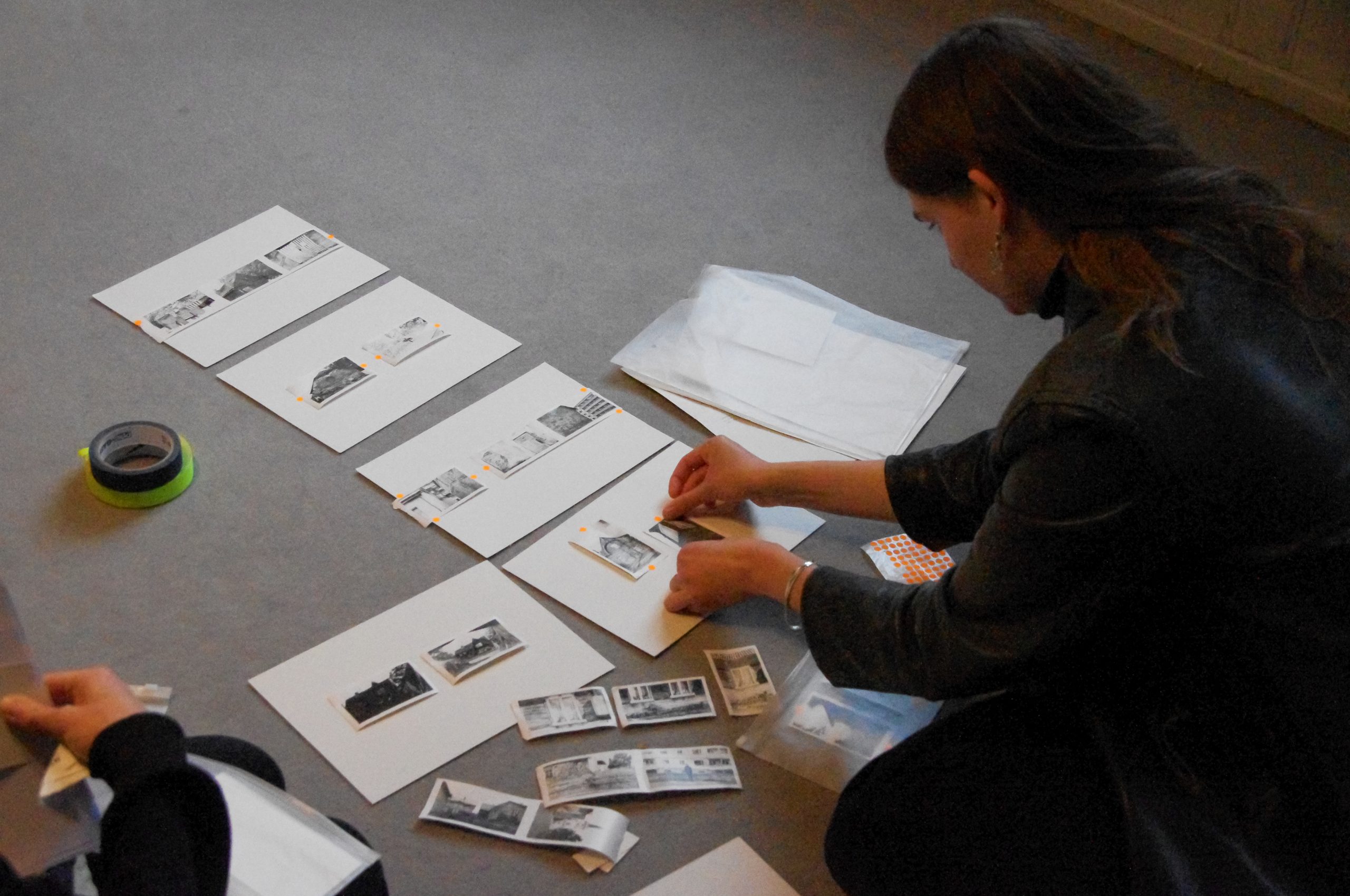
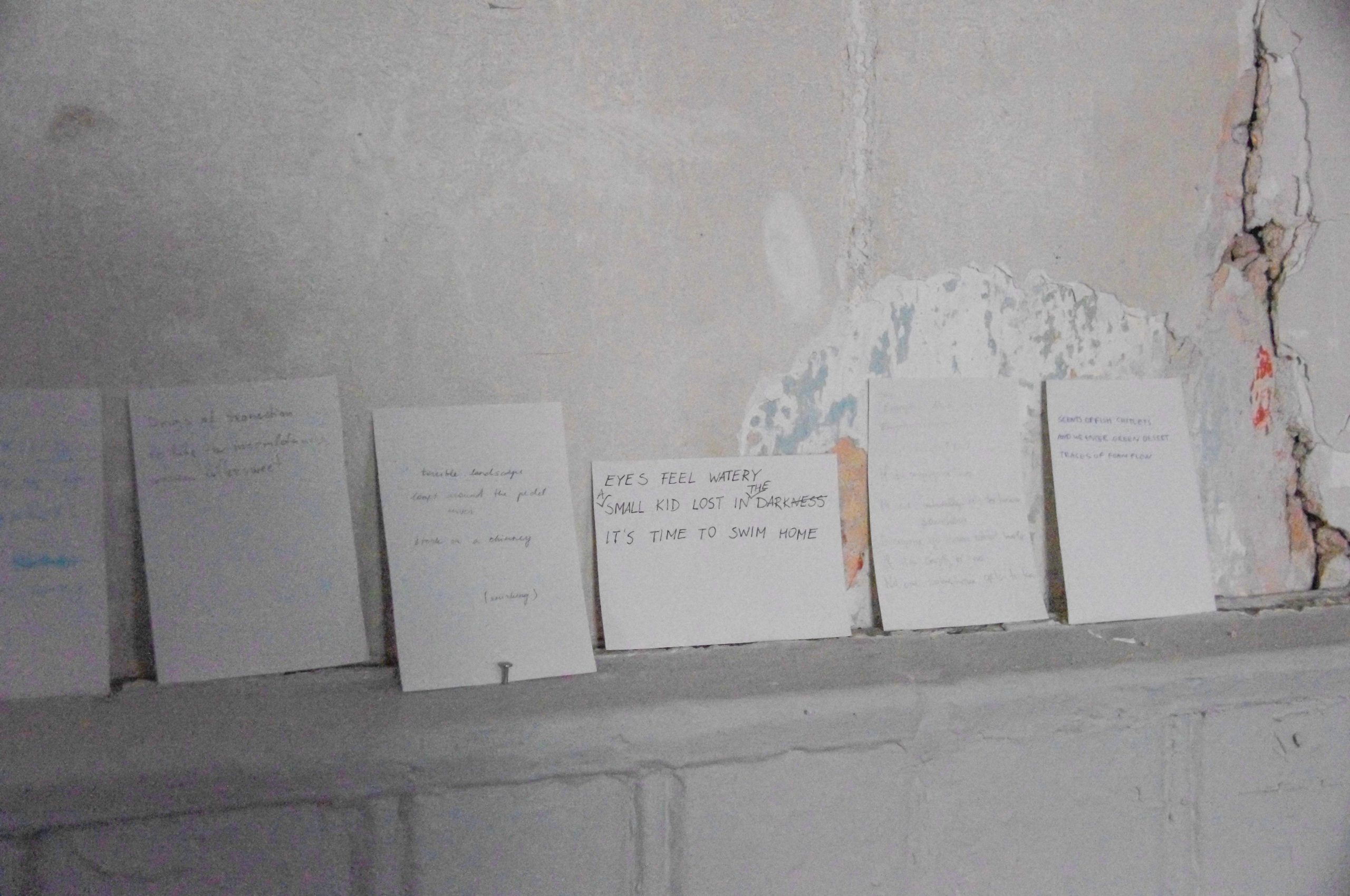
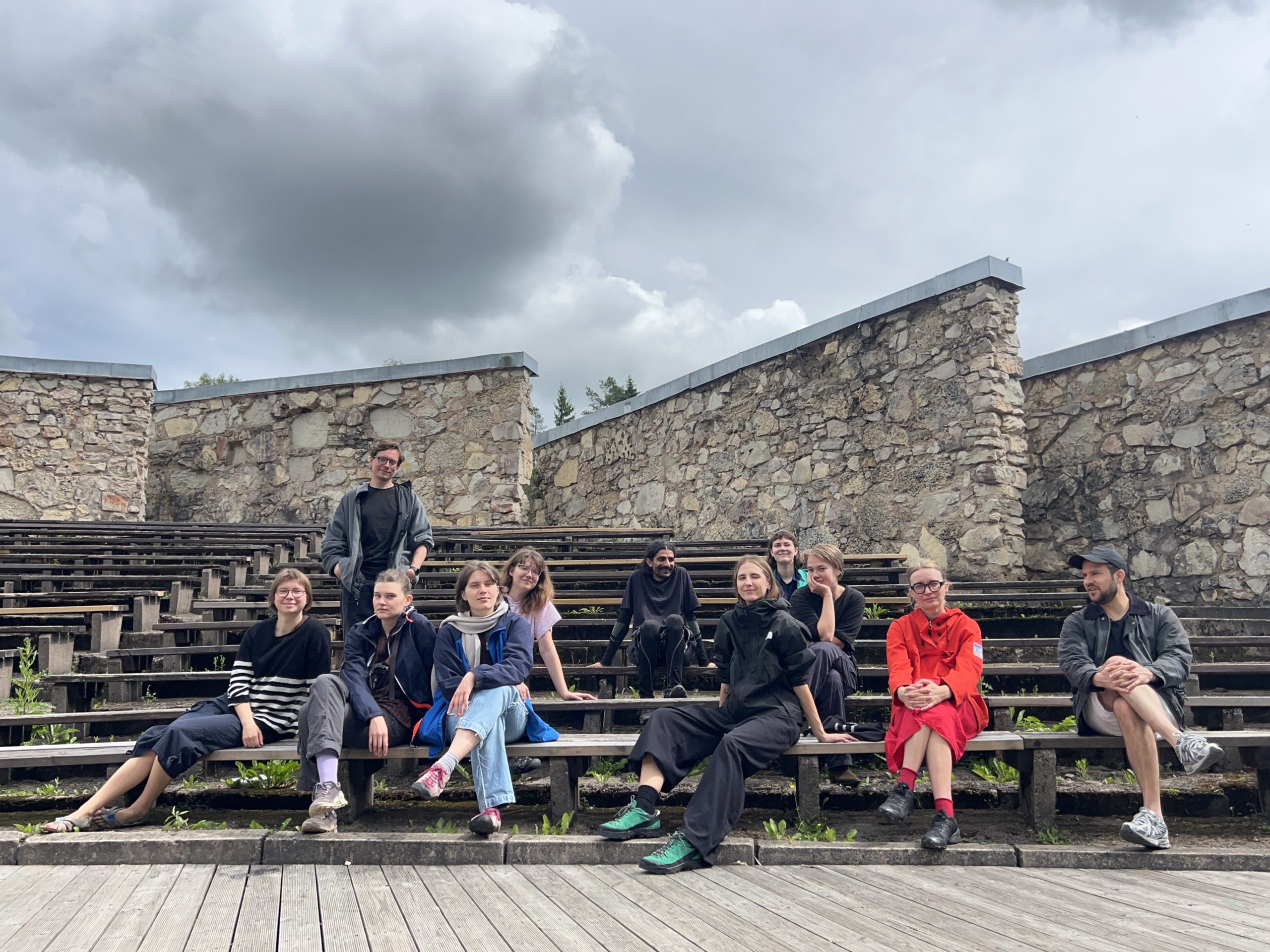
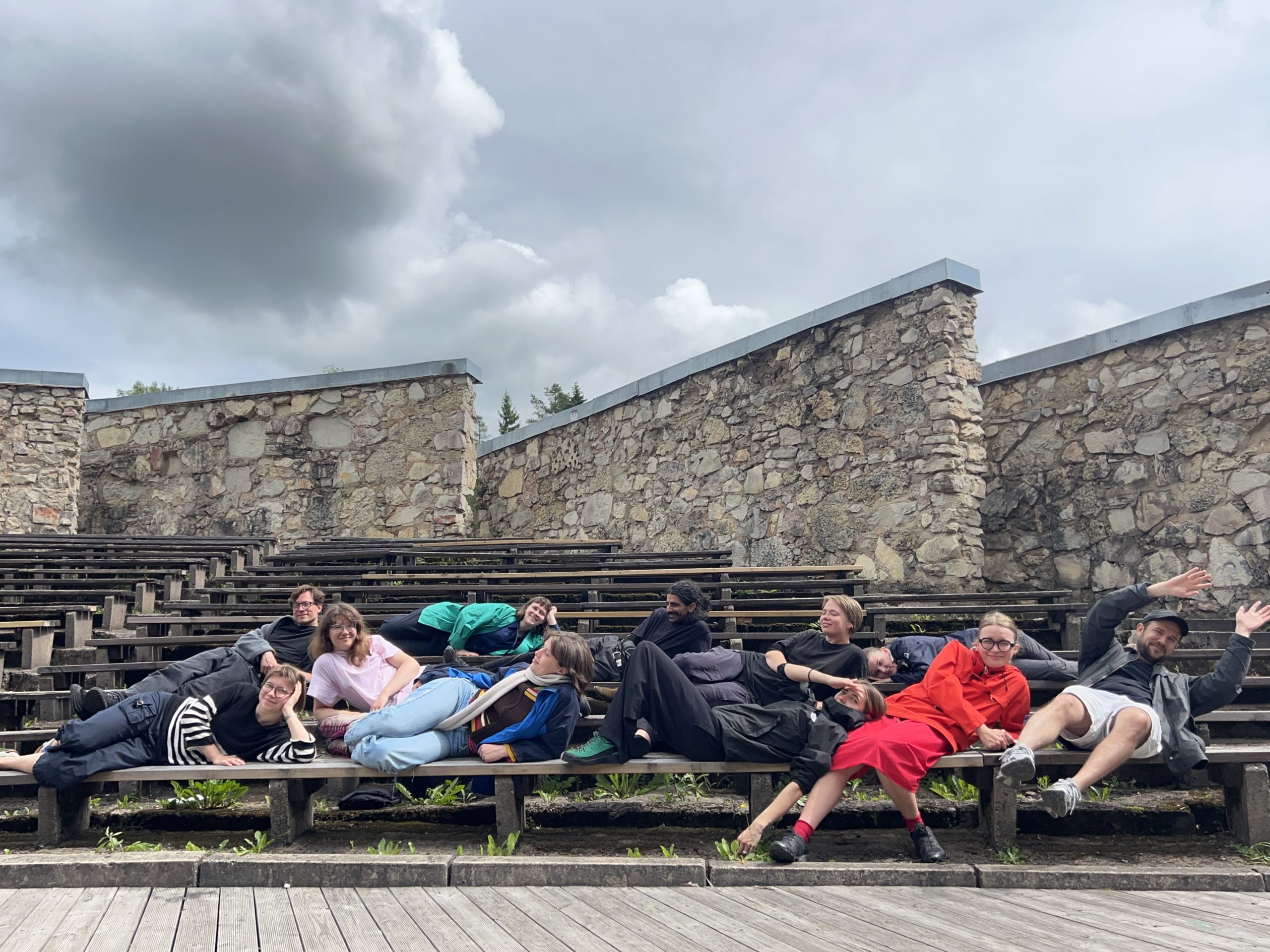
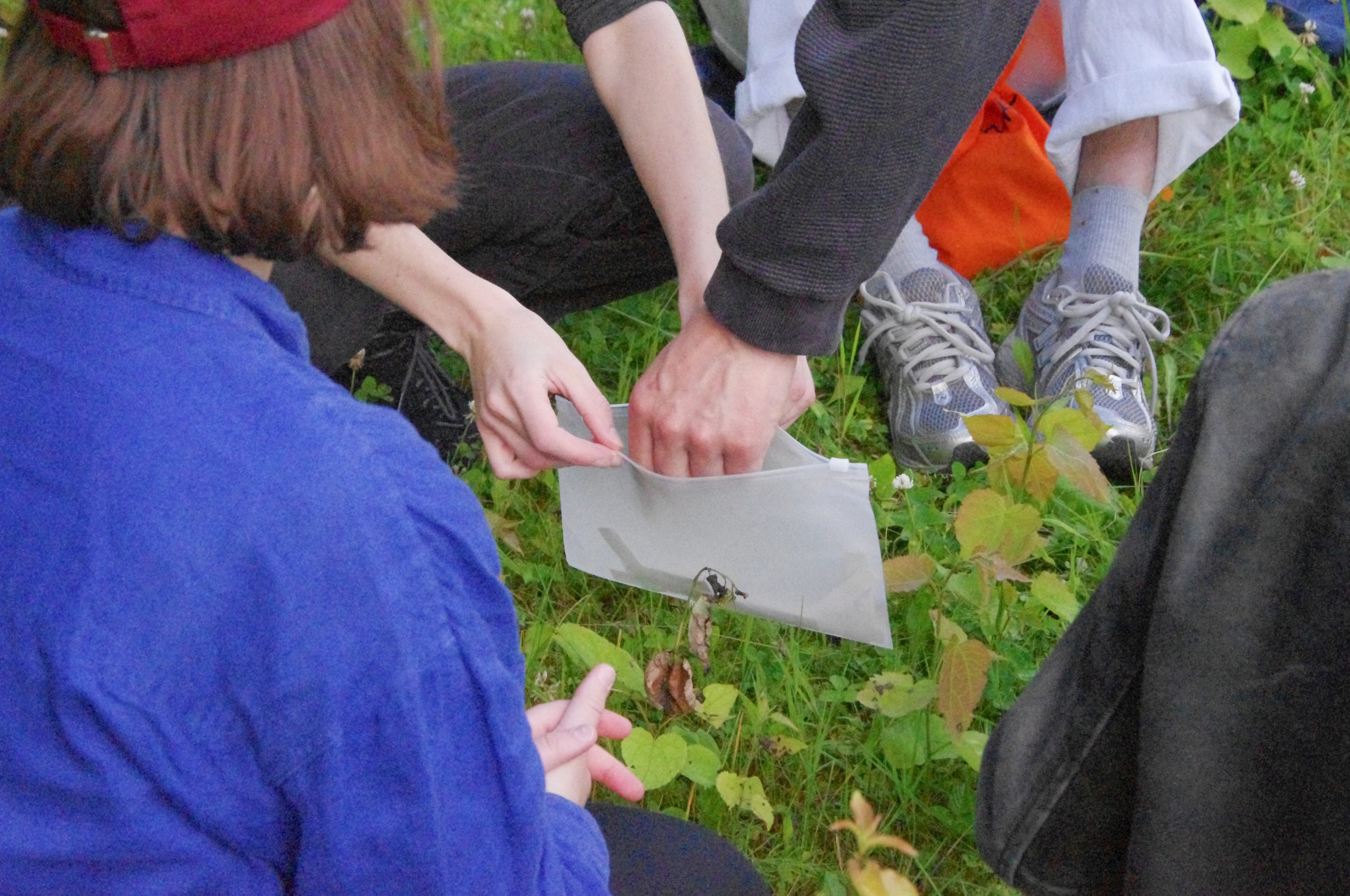
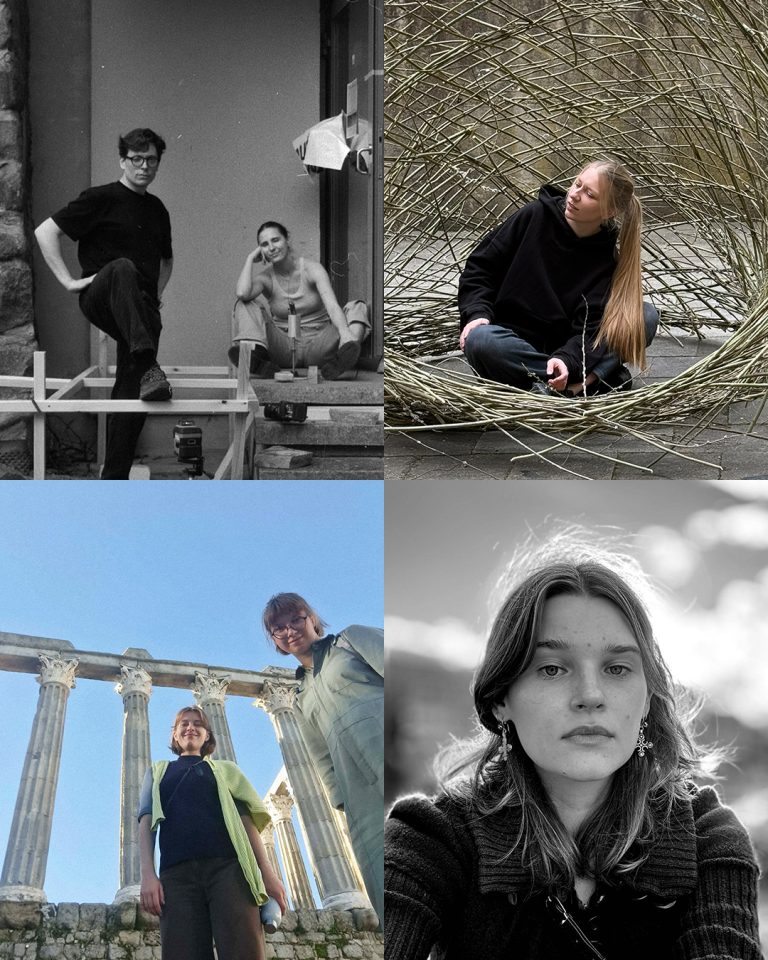
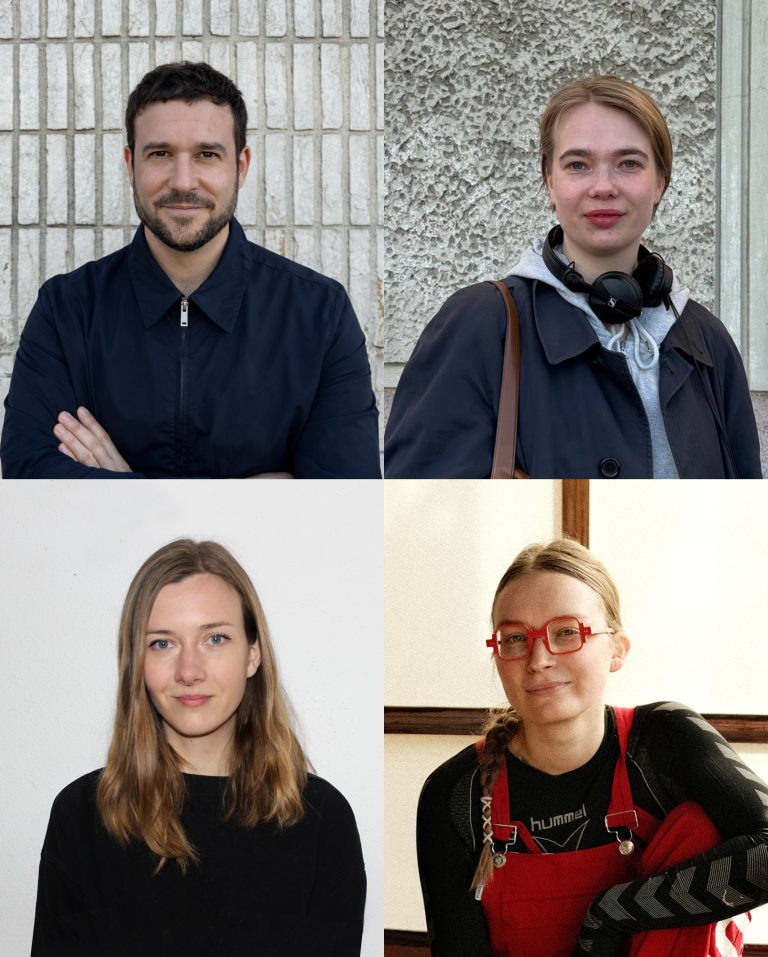
Moments and impressions from the residency of the sixth season of the Experiments' Platform.
2026 07 22
“There is a little time left, not much, to revolt. We must mobilise for some worlds, and against others.” – A quote from a film screened at the residency “Donna Haraway: Story Telling for Earthly Survival”
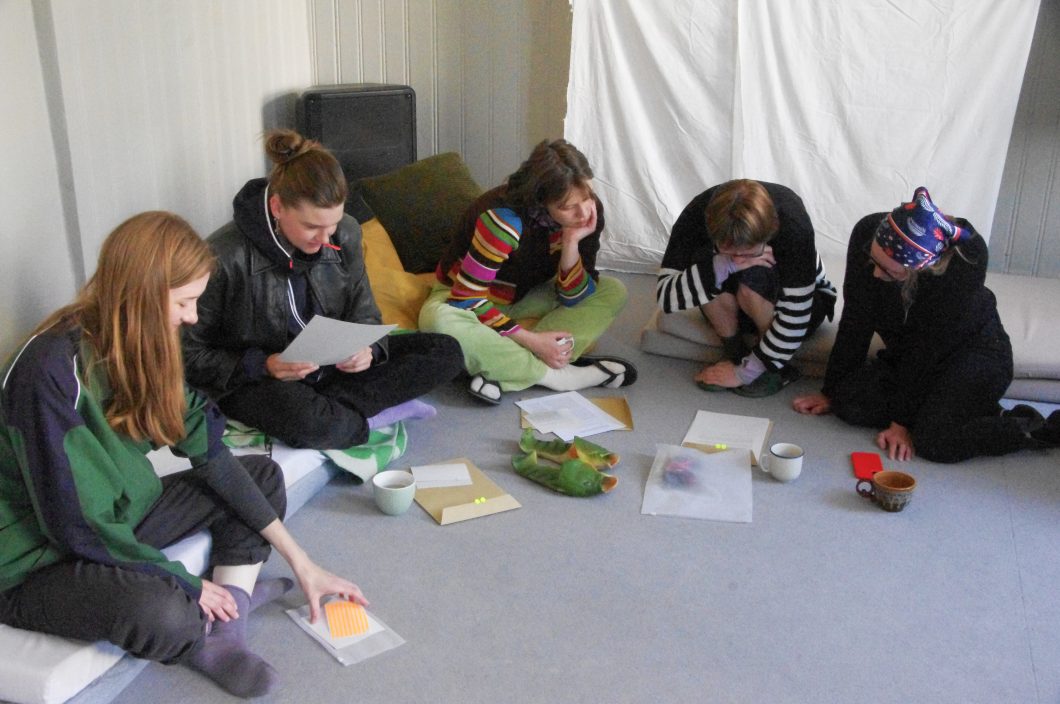
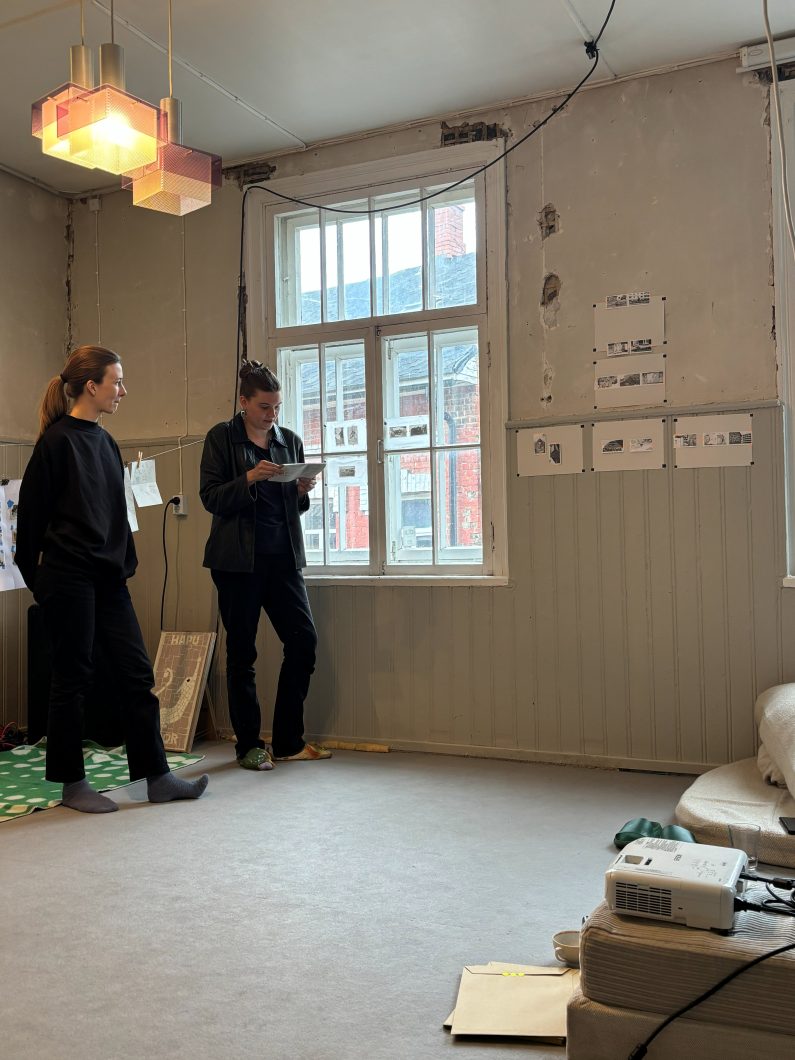
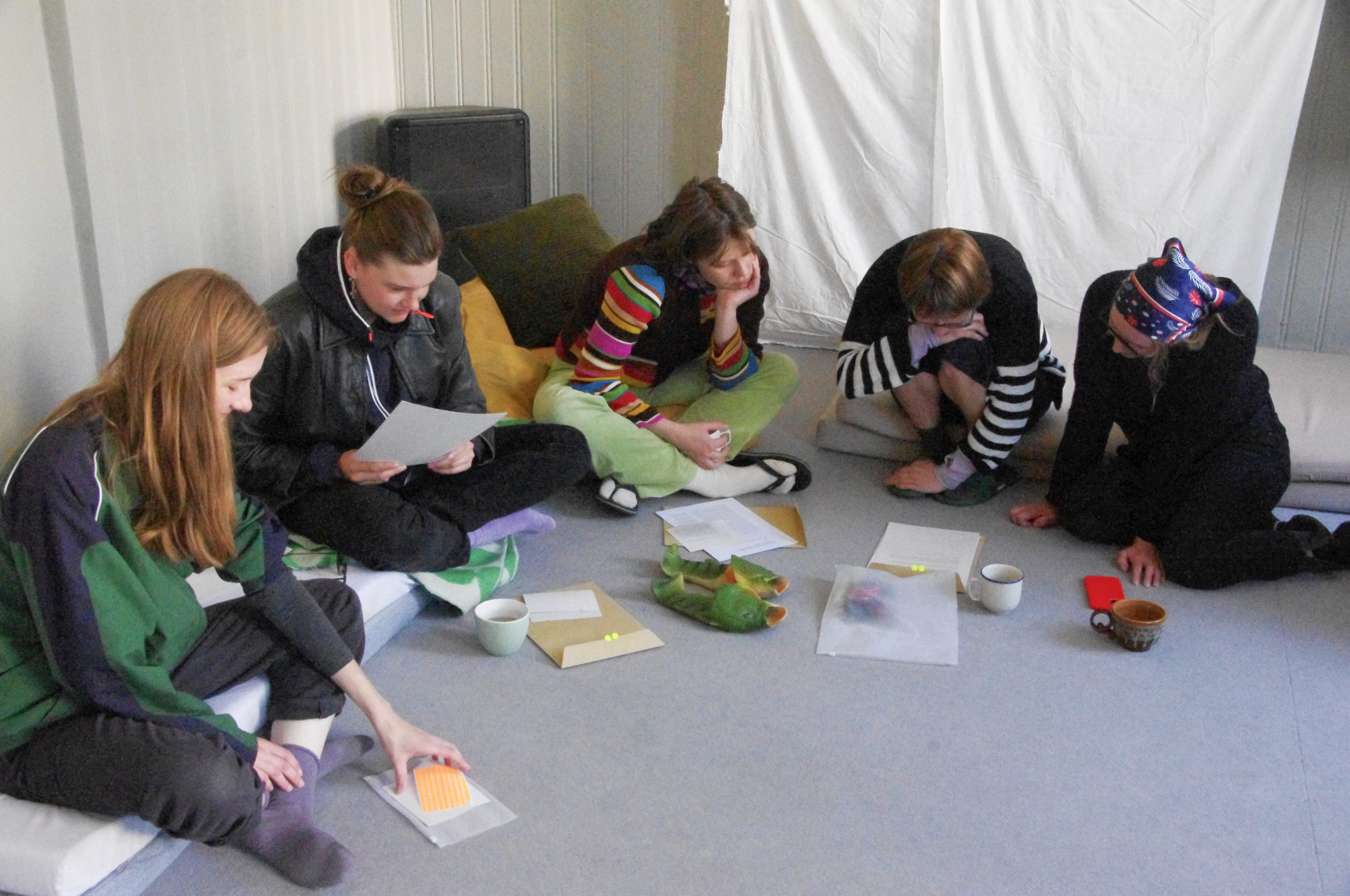
The sixth season of the Experiments’ Platform began with a meeting of the entire team – mentors, participants, and curators – at the VARES residency in Valga, where we embarked together on a reflection on the worlds around us, creating a space to imagine futures that defy sterility, control, consumption, and endless progress. A neo-futuristic workshop led by one of the programme’s mentors, Aušra Česnauskytė, along with film screenings, discussions, cooking, and relaxing together, helped us get to know one another and begin developing our experiments. It was a unique opportunity to launch the project with an in-person gathering in a space that perfectly matched the season’s theme and to find inspiration for experimentation.
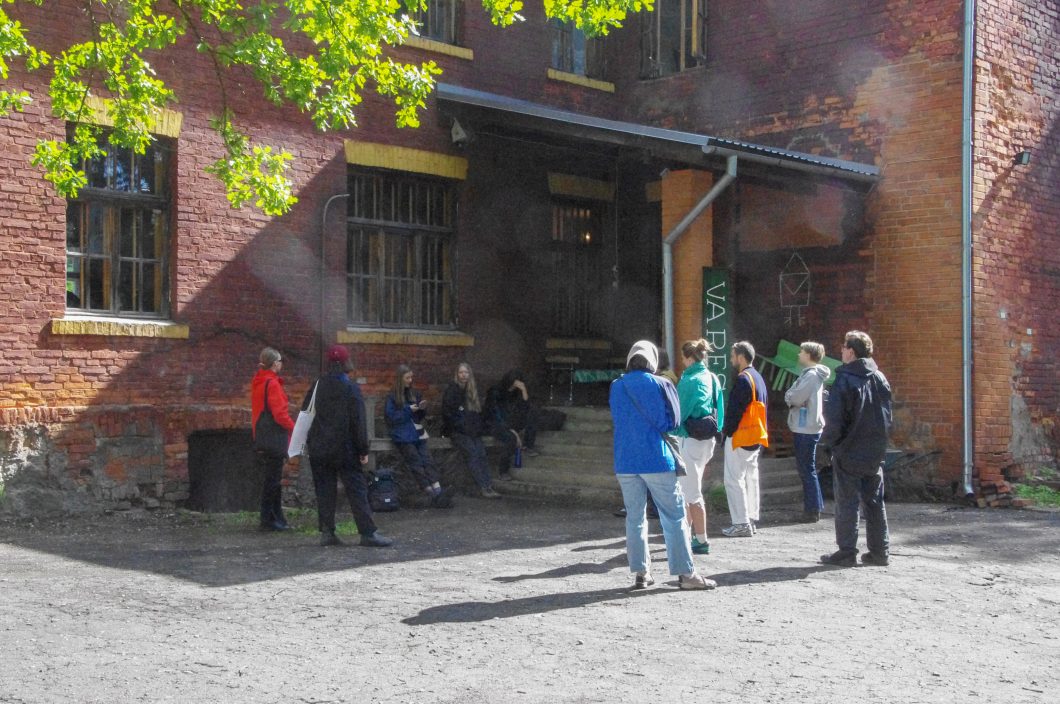
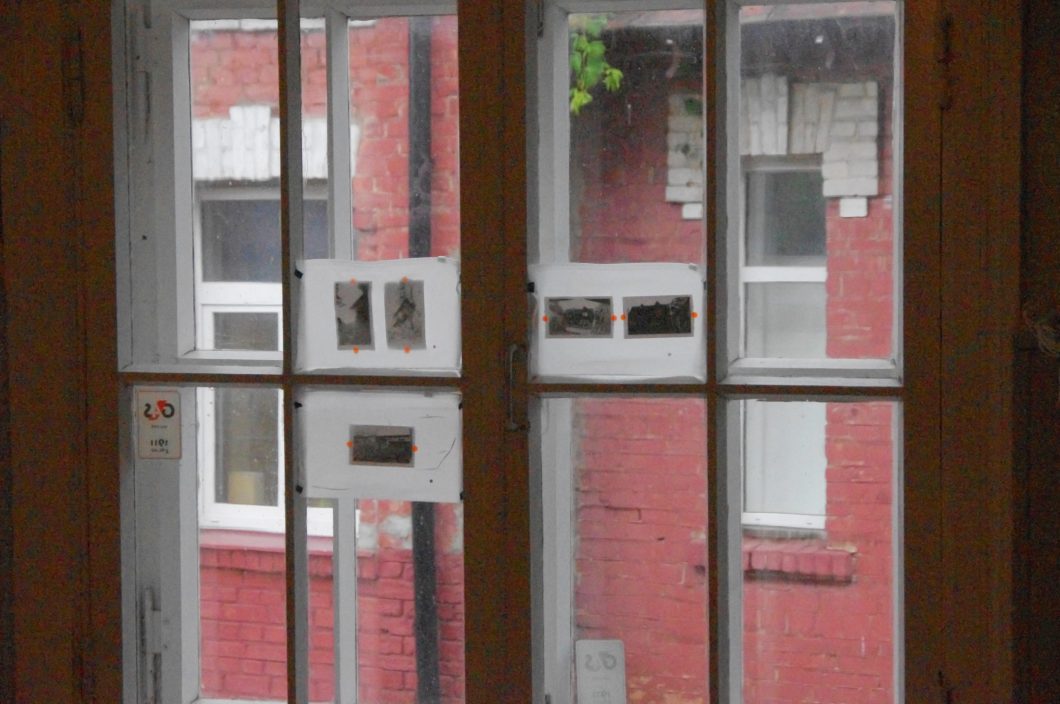
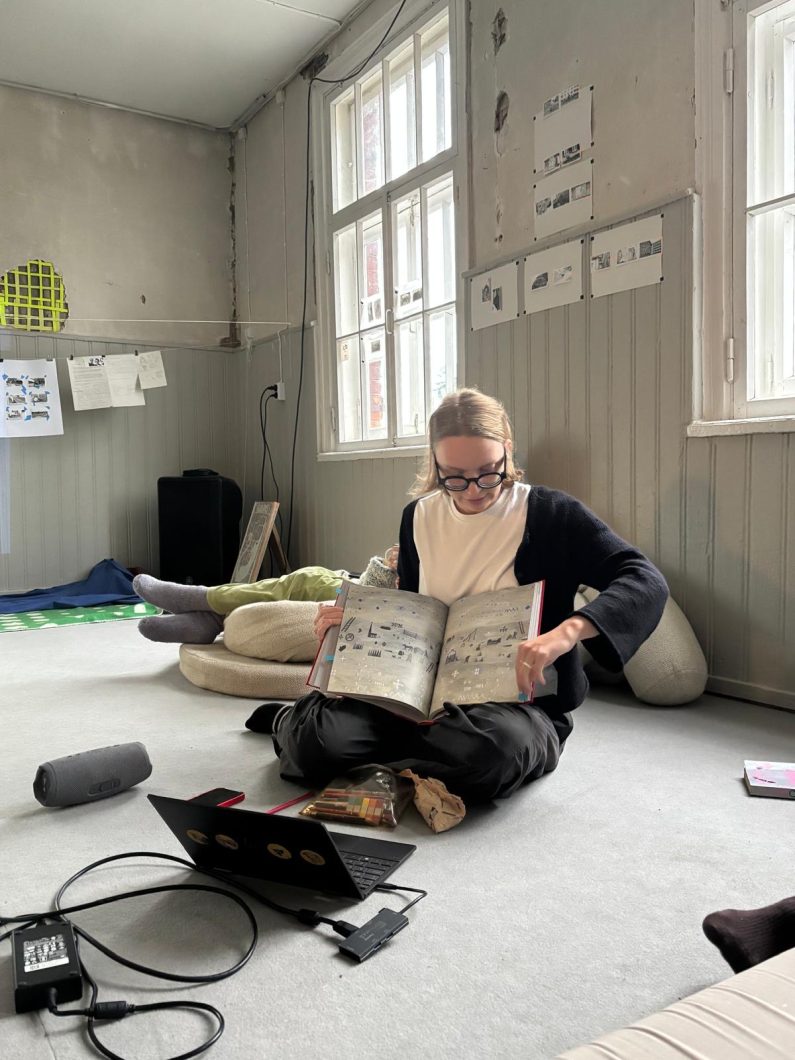
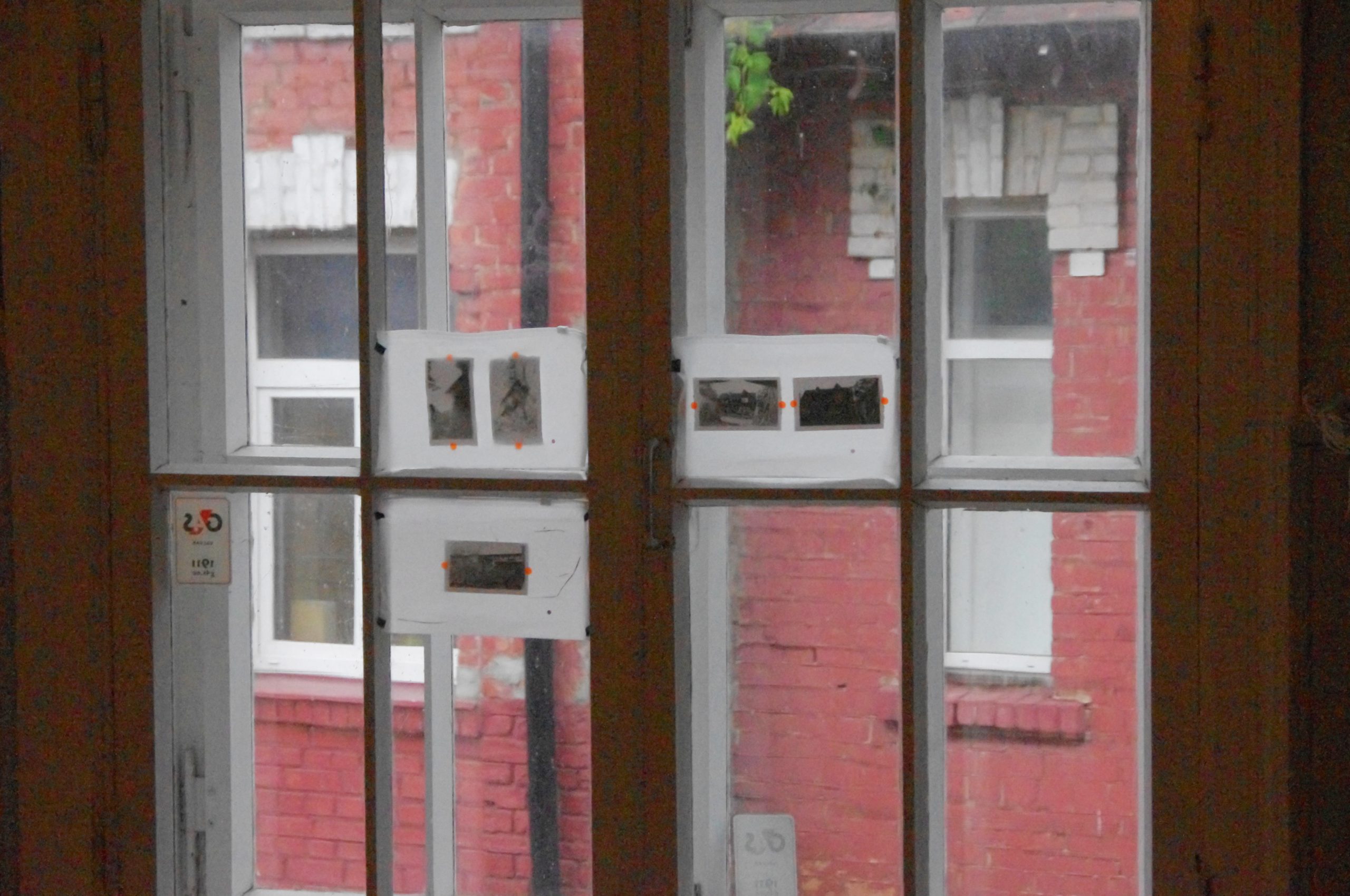
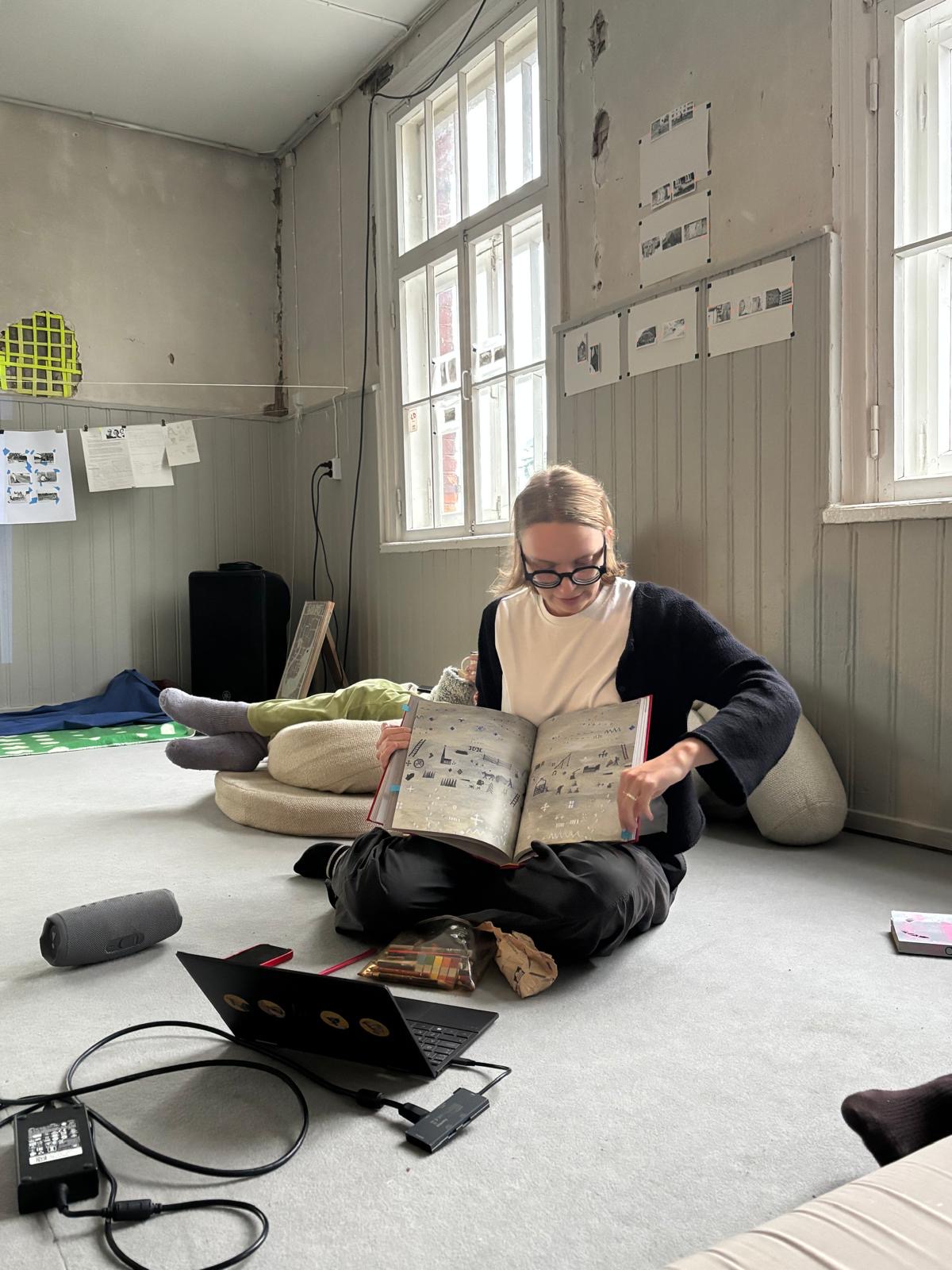
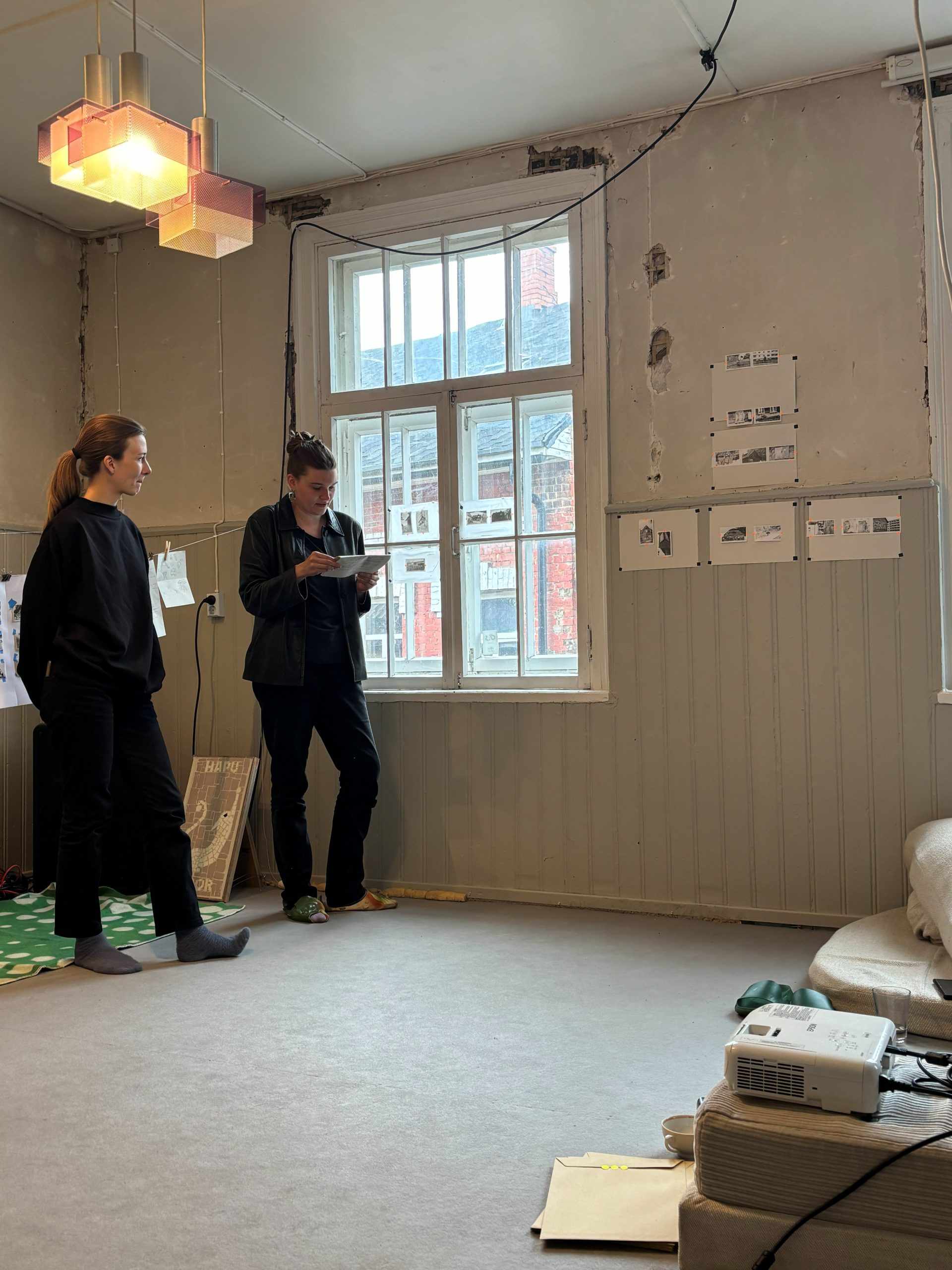
The VARES residency, located in a unique spot on the border between two countries – Latvia and Estonia – offered a generous environment for entering an experimental state of mind. Founded by a group of young architects from Estonia – Ulla Alla, Merilin Kaup, Mari Möldre, and Margus Tammik – this space has been running for three years now, with the goal of discovering and creating alternative spatial practices. Particular attention is paid here to a critical rethinking of the discipline of architecture, the exploration of slow practices, the revival of traditional crafts, and the adaptation of recycled materials. The architects established this space in a former school building, constructed as far back as 1905. The building belongs to the Valga City Municipality, which has entrusted its management to the young architects for twenty years. The house has 15 tiled stoves, 14 rooms, a basement, and an attic. These spaces are divided into a shared kitchen, gallery, woodworking workshop, library, storage, laundry, shared shower area and 6 studios where residents live. During the summer season, this space is visited by many curious spatial practitioners, artists, and researchers from all over the world. The attentive, skilled, and caring approach of the residency initiators to the building’s spaces is felt in every detail – all rooms have a unique look, created using specially adapted, mostly reused materials, self-constructed furniture, unexpected, playful elements, and colour combinations. Since the building is very old, its current caretakers keep discovering unexpected details, such as hidden doors or unexpected materials, which they carefully assign architectural meaning to; jokingly, they call this building a layered cookie. The special spaces where we spent the most time are the shared kitchen and the gallery space connected to it by a door, which, like the living room of the house, bring all residents together every day to experience the joys of cooking and tasting, resting, and discussing the day.
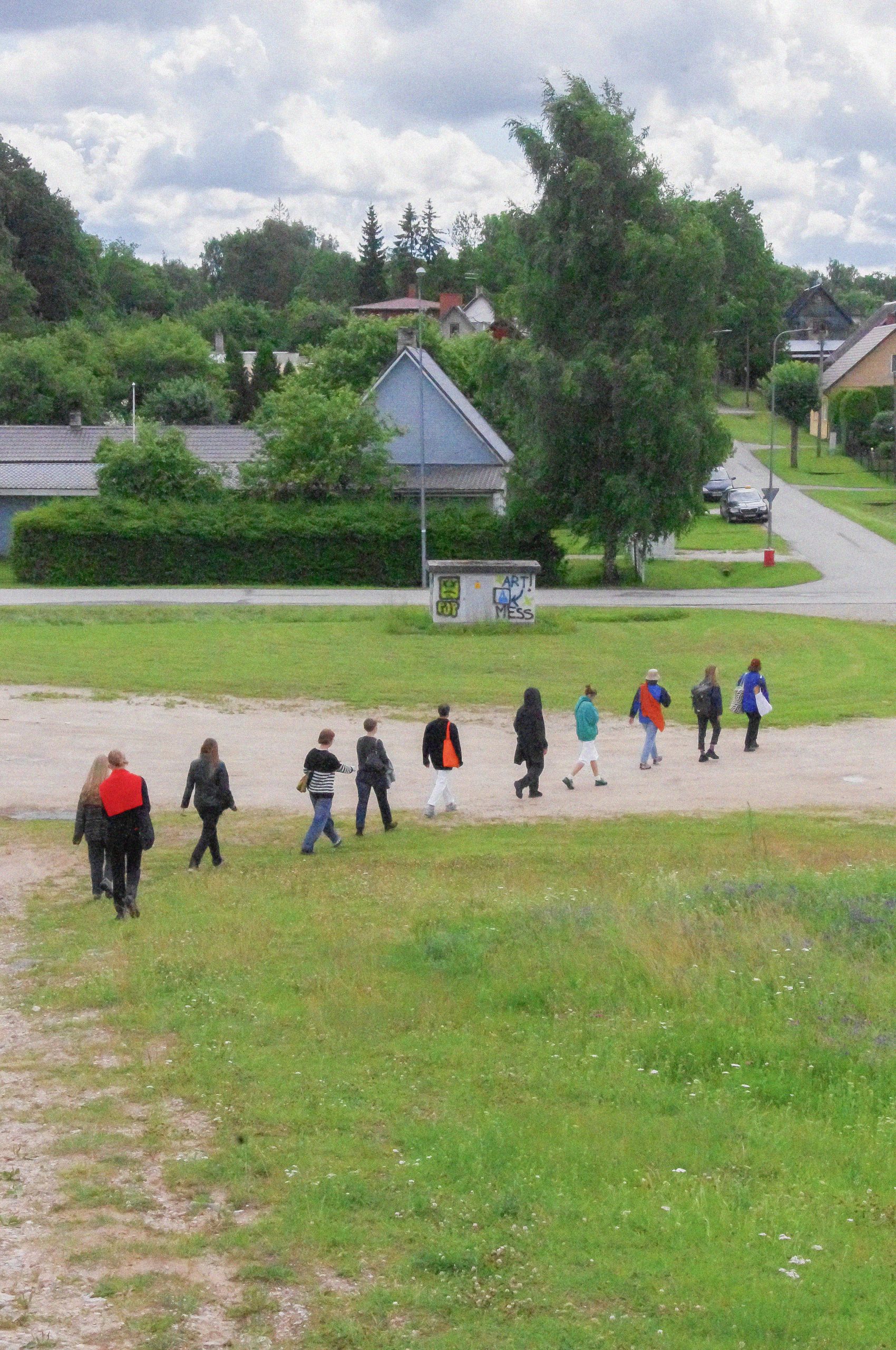
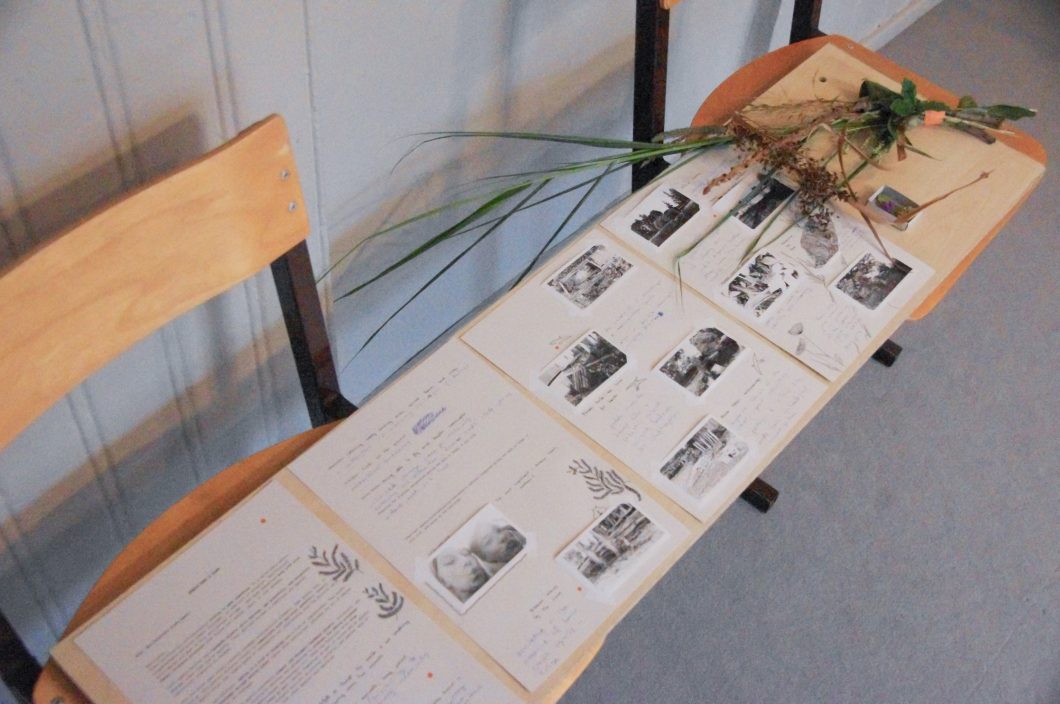
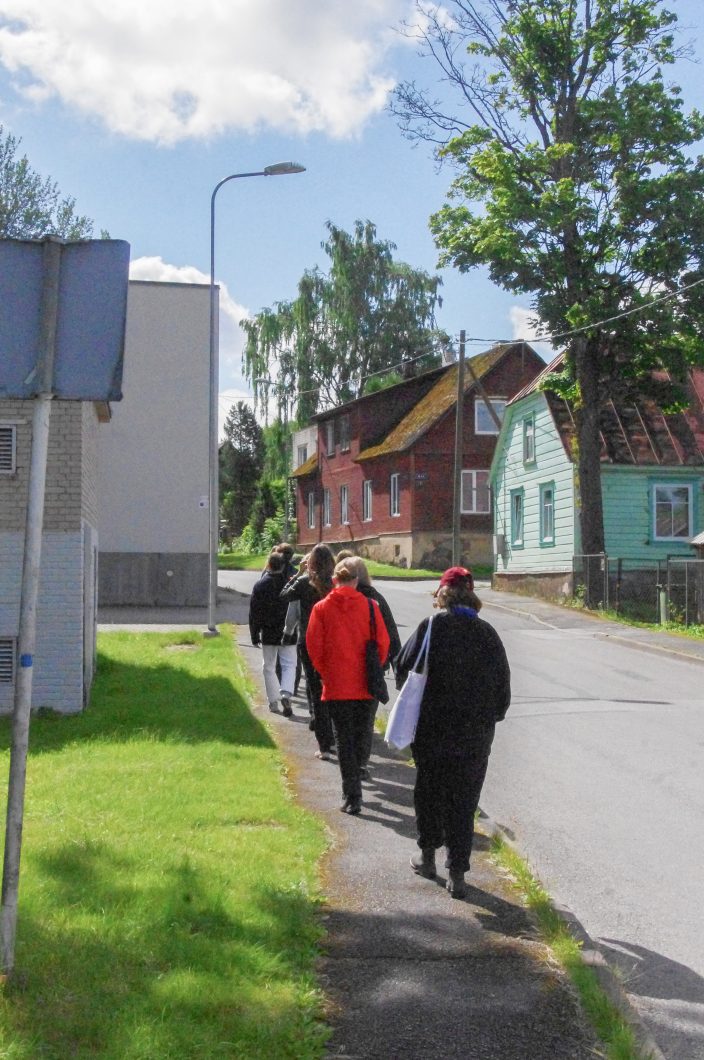
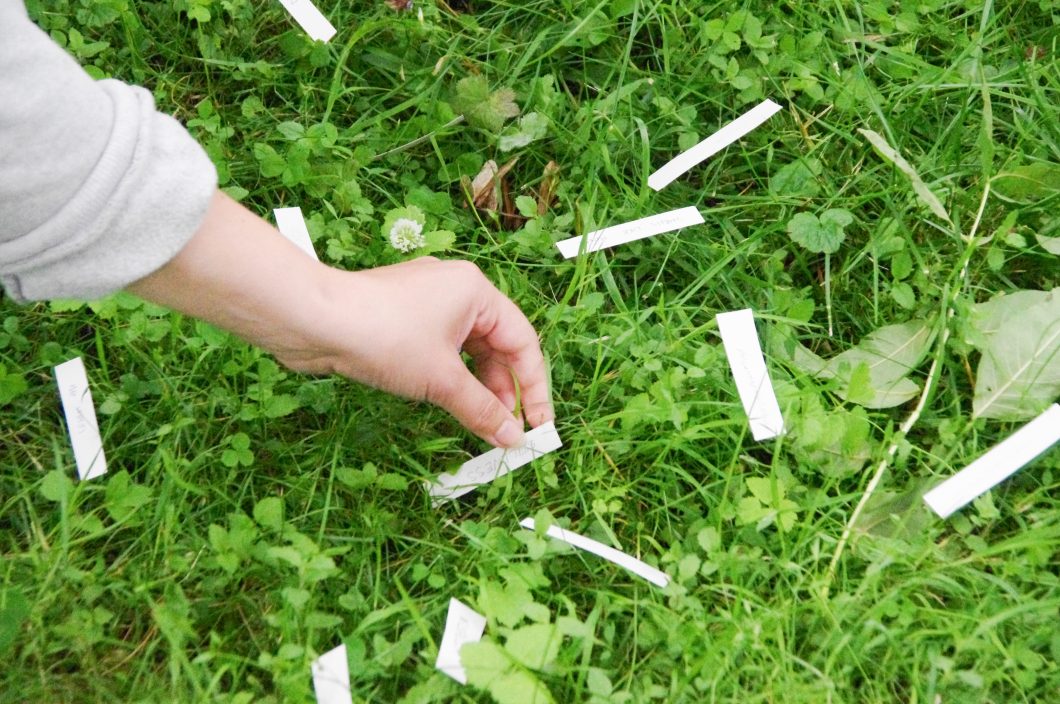
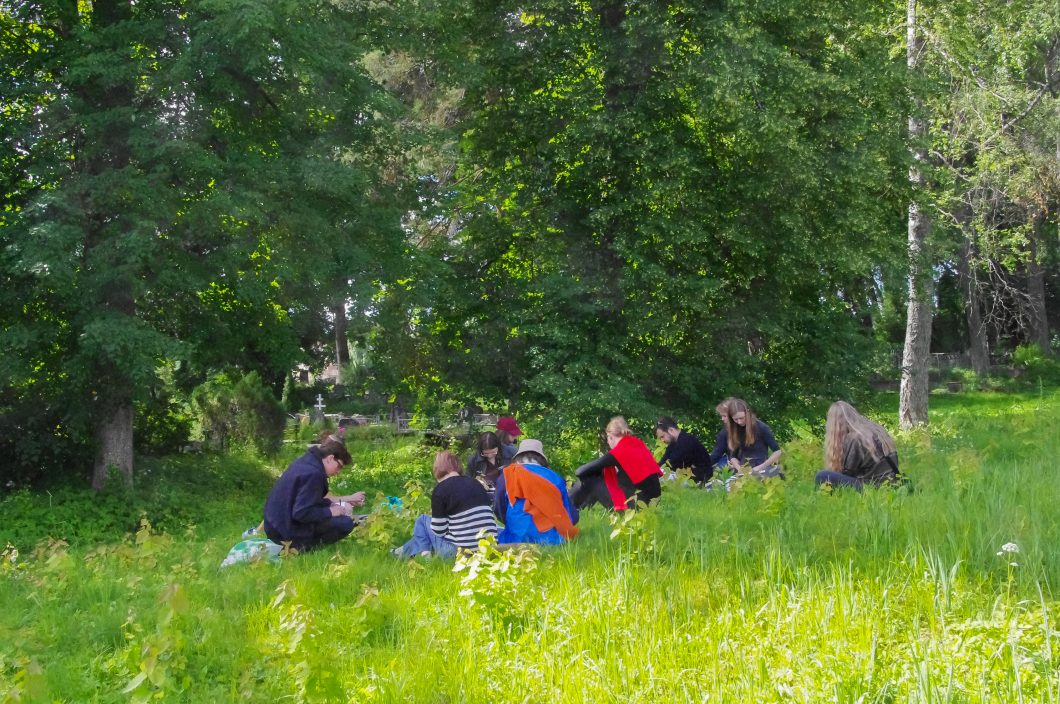
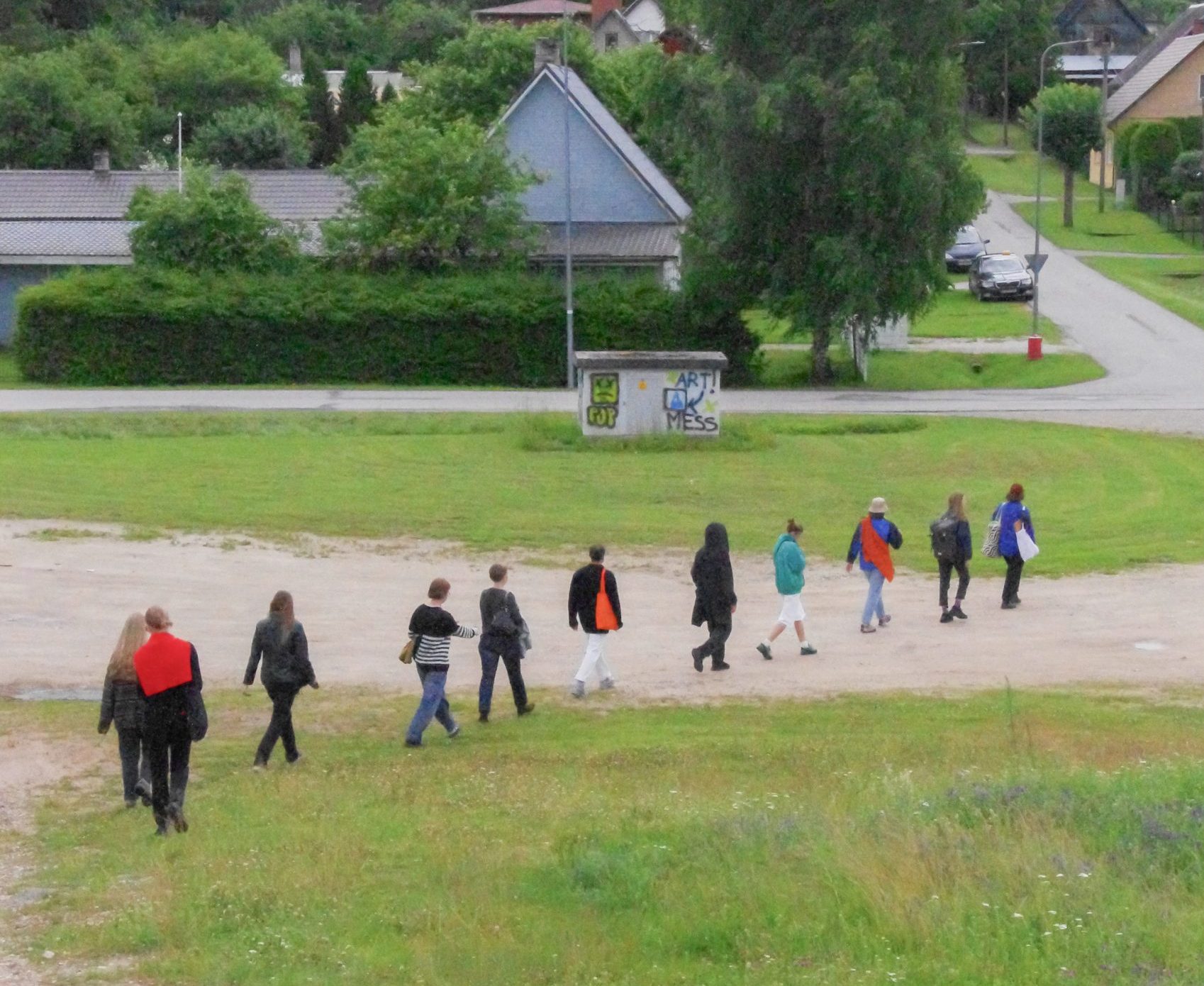
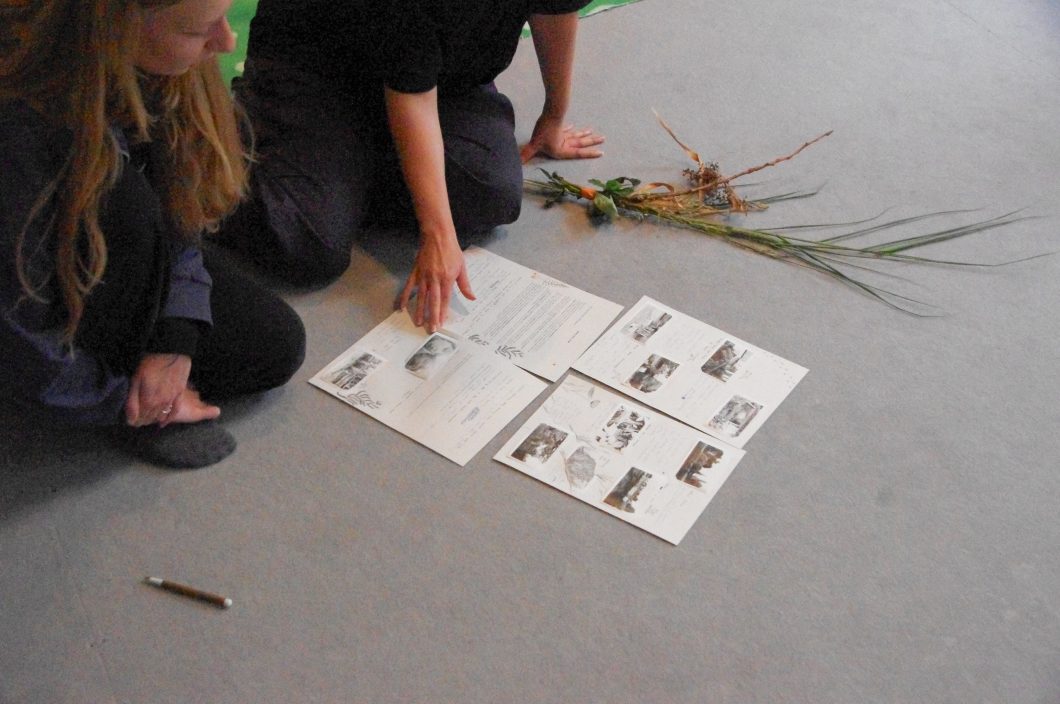
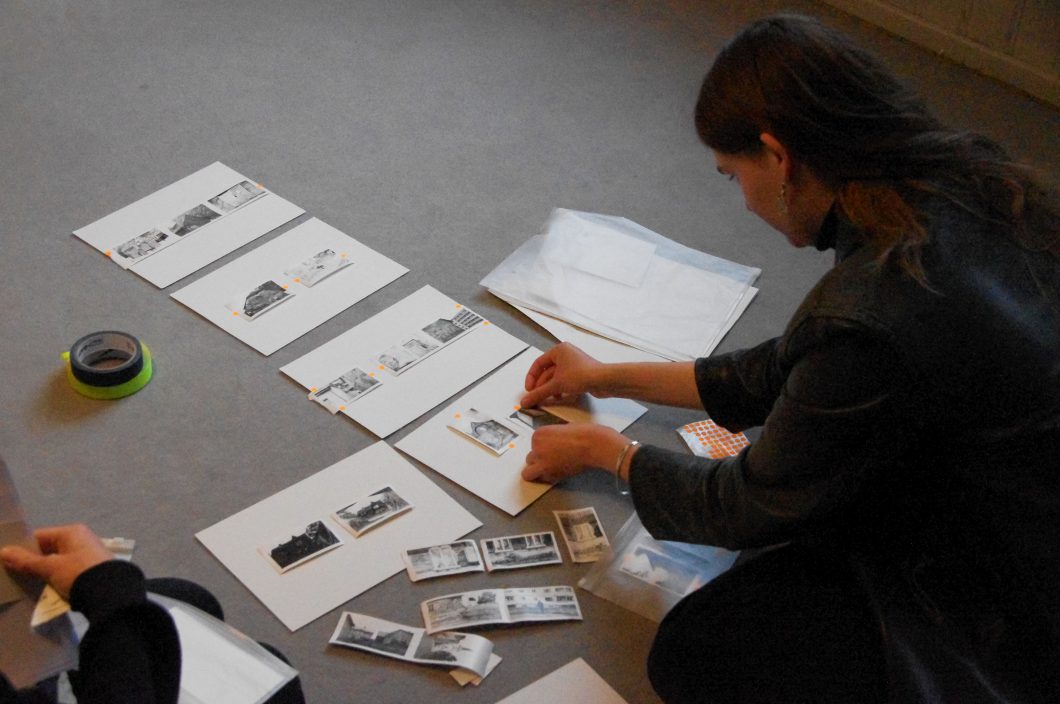
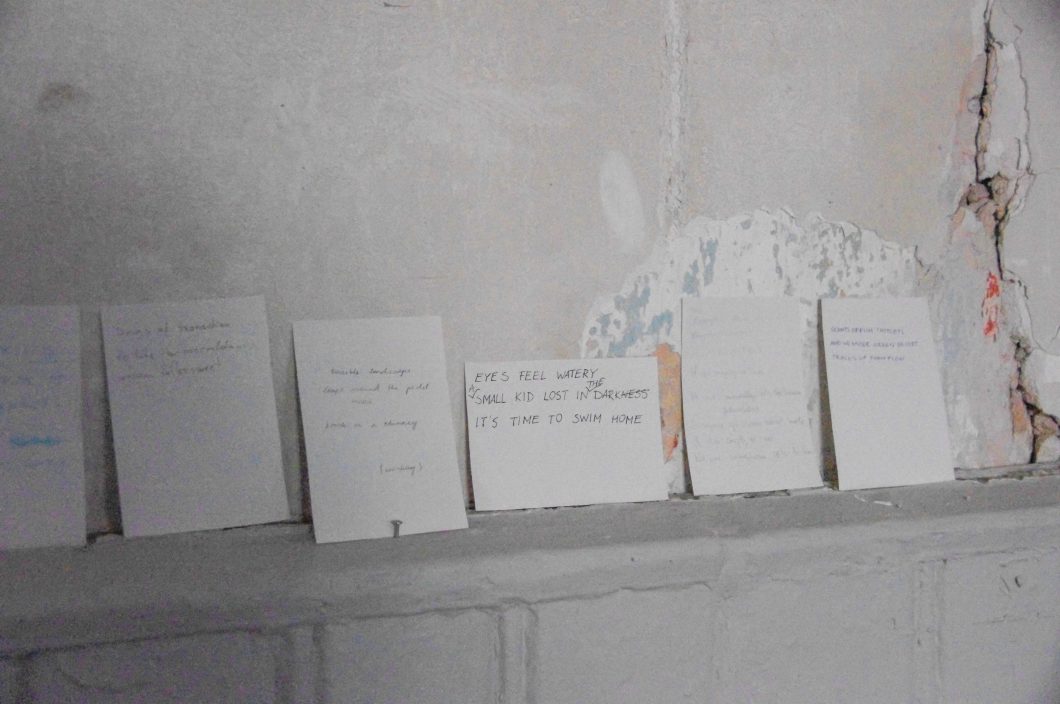
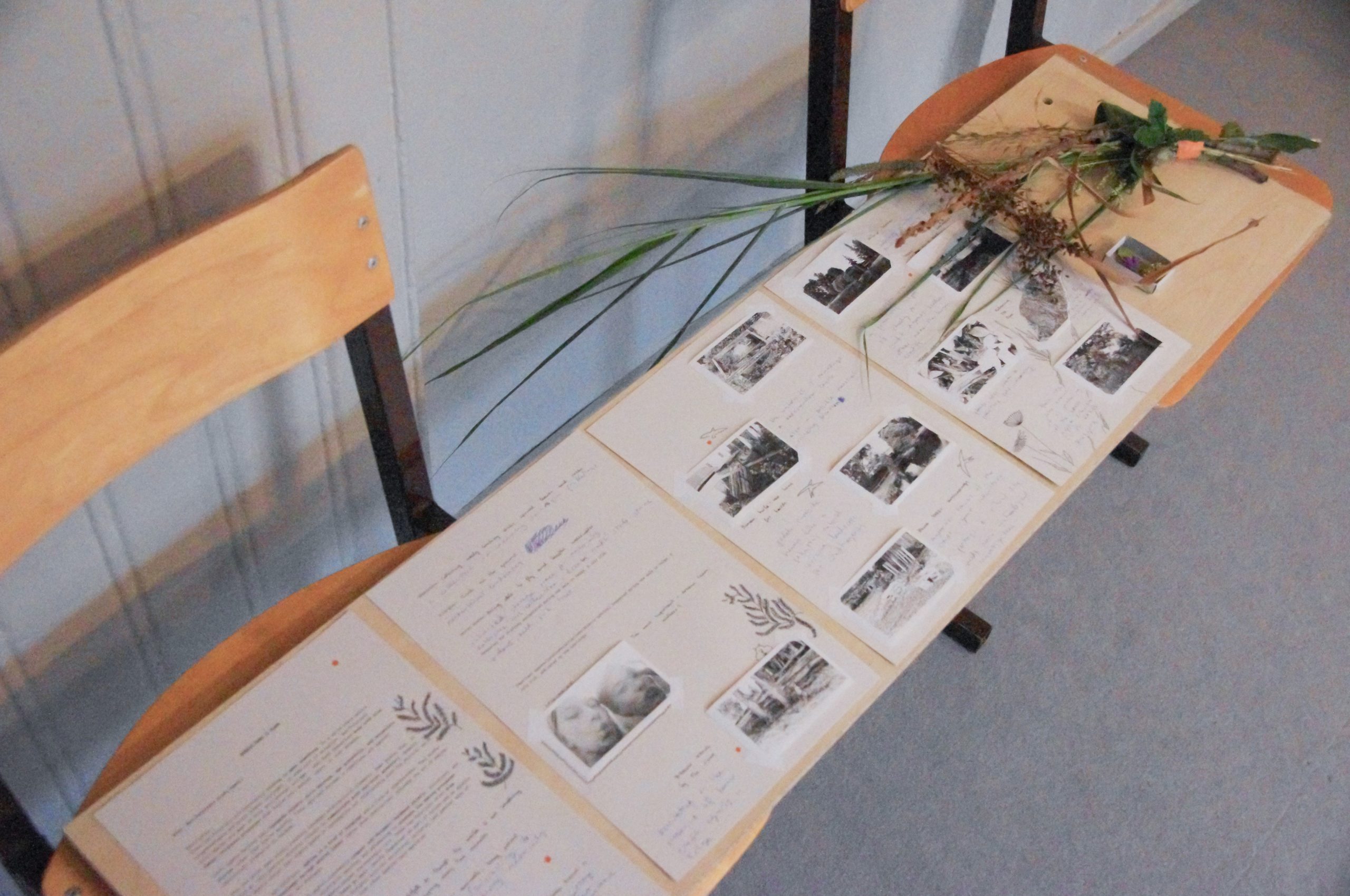
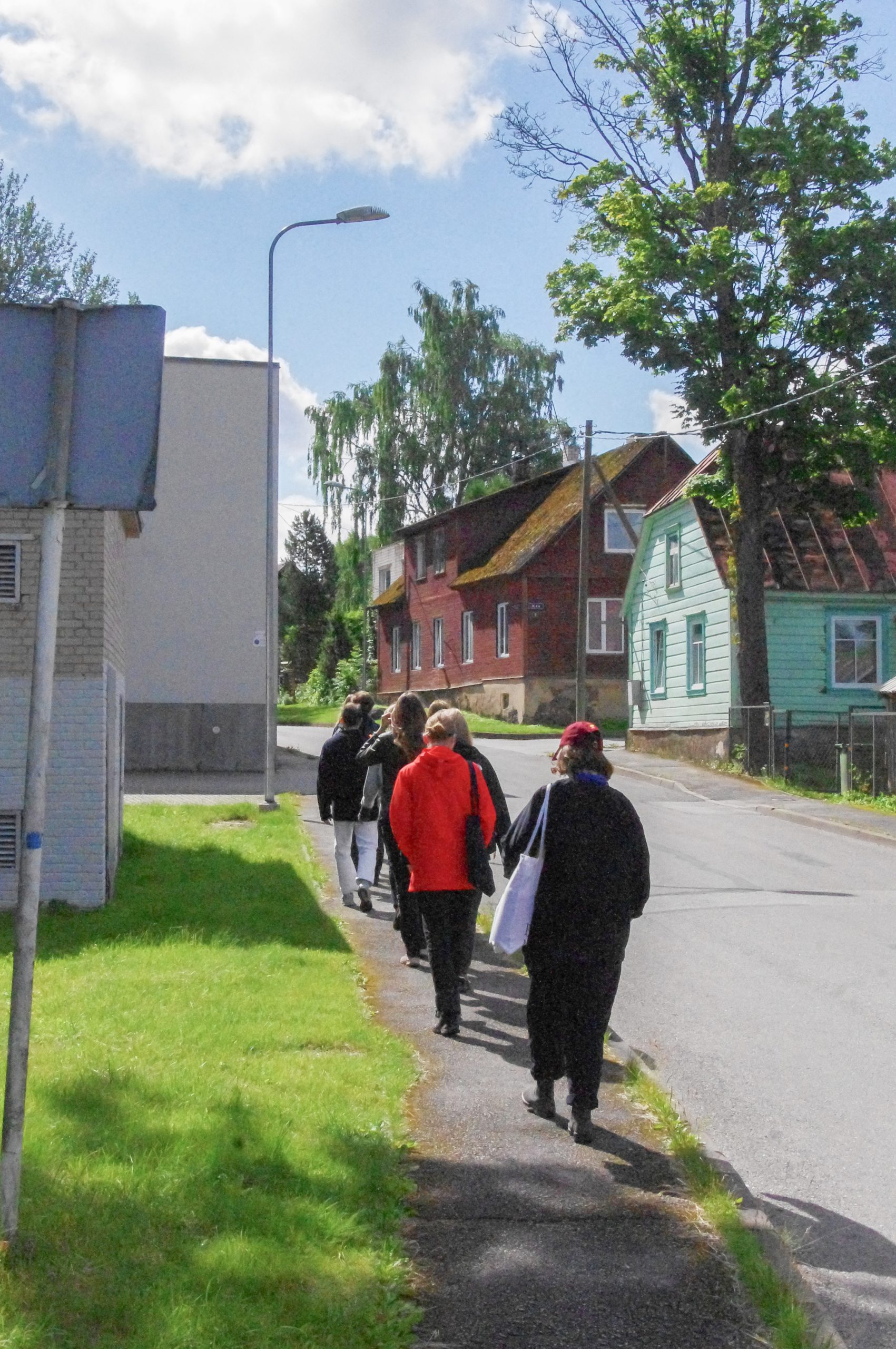
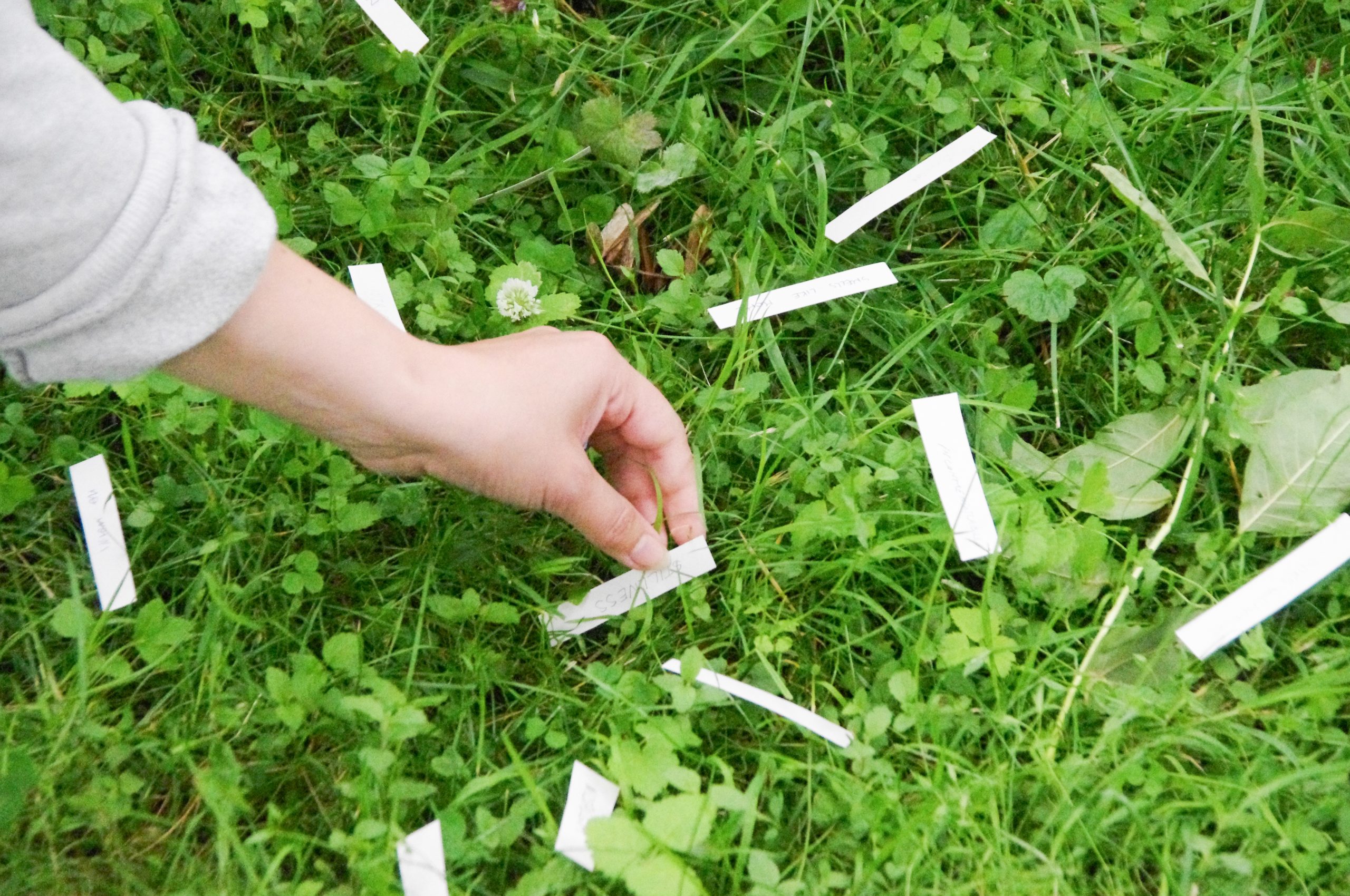
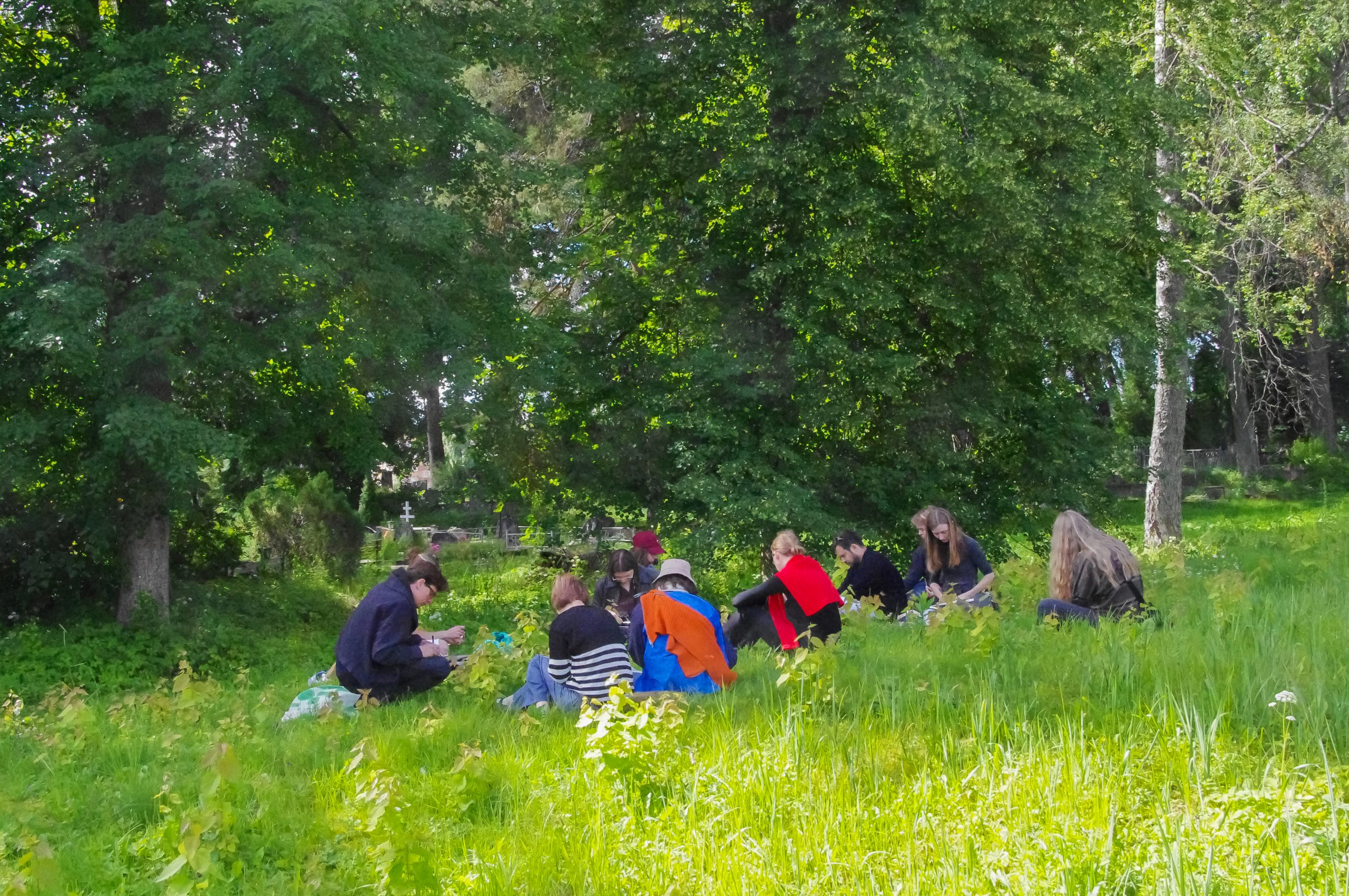
During the five days spent in the residency, the Experiments’ Platform team delved into the programme’s theme “Affording Environments”, aiming to critically reflect on the phenomenon of smoothing and equalising spaces and consider how man-made environments can promote inclusivity, empathy, and resilience to productivity and control. This was helped by a neofuturistic workshop led by Aušra Česnauskytė, one of the founders of the collective “Neofuturistic Walks”, during which, using walking, speculative design, neofuturistic thinking, and role-play methods, duos of participants and mentors explored the urban environments of Valga/Valka, interpreting them through the lenses of their own experiments. On the first day of the residency, the entire Experiments’ Platform team went on a silent walk, intuitively led by a different member in turns, collecting words during the walk, and then creating a haiku. On the afternoon of the first day, the workshop continued with a second walk, during which the duos of participants and mentors, immersed in their models of neofuturistic subcultures, spread out around Valga/Valka for intuitive city inspections, using documentation as a tool for observation. On the second day, the neofuturistic workshop continued, with the participants continuing to observe the city and creating and presenting their portraits of subcultures. In the afternoon, the entire team exchanged inspirations – everyone shared inspiring artists, projects, objects, and readings. The evening of the second day was concluded with a screening of the film “Donna Haraway: Story Telling for Earthly Survival”, which was closely related to the workshop that took place during the day. On the third day, the neo-futuristic workshop continued with a collective reading of an excerpt from the book by Byung-Chul Han, “The Disappearance of Rituals: A Topology of the Present”, and a discussion on the text, which was accompanied by the creation and presentation of thematic subcultural rituals developed by mentors and participants’ duos. The workshop ended with the first individual mentoring sessions to discuss and plan the next steps in the implementation of the experiments. We ended the residency with a final joint dinner and the next morning’s bike ride to the impressive outdoor stage space located in the green oasis of Valka.
Currently, filled with impressions from the residency, the participants of the Experiments’ Platform are accelerating the development of their ideas with the remote support of mentors and planned spontaneous team meetings in the Architektūros fondas’ space. Uljana Kudriavceva and Ieva Bagdonaitė, accompanied by mentor Ulla Alla, explored the play spaces of Valga/Valka during the residency, questioning their sterility and strictness and creating a portrait of the “Perfect Child”. Their research will continue by further observing children’s play spaces in Vilnius and developing methods to capture these insights. Guostė Marija Ringelytė, whose mentor is Aušra Česnauskytė, placed her residency’s focus on the themes of the disintegration and transformation of materials and material grief, exploring the decaying surfaces and forgotten corners of the city. Guostė’s research focuses on the observation of newly built spaces in Vilnius and material intervention as a form of protest. The “Ritual of Complaint” developed by Titas Joneliūkštis and Fausta Šeduikė, with mentor Pablo Encinas Alonso, provoked interesting discussions in the team during the residency and inspired further development of the idea – perhaps there could be a “Complaint Pavilion” in the city, where those who wish could express their opinions live in a ritual format near new or existing urban spaces. Laura Jančiauskaitė, whose mentor is Ella Prokkola, looked at non-human traces during the residency, scouting for plants from which to weave, and considering dialogues with non-human beings. The ritual of talking to an animal was discussed, the technique of “Cattle calling” in a form of singing was recalled, and how to implement such a ritual today was considered. The experiment seeks to interpret weaving metaphorically as a way to create interspecies relationships.
You can follow the progress of the research being developed in the Experiments’ Platform on the platform’s website. An interim discussion of the experiments with the entire project team is planned for the end of August. In November 2026 – an open group exhibition of programme participants is planned at the SODAS 2123 cultural complex in Vilnius.
We, Public Institution “Architektūros fondas”, legal entity code 126391219, e-mail address hello@archfondas.lt, we want to publicize our activities by sending you our newsletters. As a result, we need to collect, use and store information about you as described in this consent form. We would like to ask for your consent to do so. If you give us consent to send you newsletters, your personal data will be collected, used and stored on the basis of this consent (Section 6 (1) (a) of the GDPR).
In order to achieve these goals, we may share your data with external service providers who provide us with newsletter sending and data storage services. These service providers have undertaken not to disclose the personal data they receive. We do not share your information with entities outside the EEA (the European Economic Area consists of all EU Member States plus Norway, Iceland and Liechtenstein).
Your data will be processed until the consent is revoked, but for no longer than 3 years. Before the end of this period, we may ask you if you wish to renew this consent for an additional period of three years. Such extension of consent will not deprive you of the right to withdraw your consent at any time, as set out below.
In the event that you consent to us collecting, using and storing data about you for the above purposes, you may revoke this consent at any time by contacting us at the contacts below or by clicking on the appropriate link in any of our newsletters. You also have the following rights regarding the protection of your personal data:
make a request for access to available information about you if we process your personal data from which we can identify you;
submit a request to correct or supplement the available information about you;
make a request to delete illegally held information about you;
make a request to us to restrict the processing of information held about you when you dispute the accuracy of the data or object to the processing, you do not consent to the deletion of your unlawfully processed data or you need the data to make, enforce or defend legal claims;
to challenge the collection, use and storage of your information when we process your data in accordance with a legitimate interest as a basis for data processing;
submit a request to export your data if you have provided us with the data in a systematic, commonly used format and have given your consent to the processing of such data or we have to process this data in order to fulfill the contract with you;
to submit a complaint to the State Data Protection Inspectorate (more information at vdai.lrv.lt).
We note that the exercise of these rights may be subject to conditions and / or exceptions provided by law. If you have any questions or any part of this consent seems unclear to you, we are ready to assist you. You can contact us by e-mail. by e-mail to dataprotection@archfondas.lt. If you have no objections to the information contained in this consent form, please complete the consent form below. By clicking on the “I Agree” button, you confirm that you have read and understood this notice and voluntarily agree to the public body “Architektūros fondas” sending you its newsletters to the address you have provided.